
When technology fails, the damage isn’t just measured in broken code or shattered hardware. it’s measured in staggering financial wreckage, lost reputation, and sometimes, tragic human cost.
Below are 10 of the most expensive tech failures in history, spanning software bugs, hardware disasters, and corporate oversights that wiped out billions.

1. The Boeing 737 MAX Flight Control Software
Estimated Financial Loss: $31.9 Billion+
The Flaw: Software logic error and single point of failure.
This stands as one of the most devastating software engineering failures in history. To accommodate larger, more fuel-efficient engines, Boeing altered the physics of the 737 MAX. To compensate for a tendency to pitch upward, they implemented a background software system called MCAS (Maneuvering Characteristics Augmentation System).
MCAS was designed to automatically push the aircraft’s nose down based on data from a single “Angle of Attack” sensor. When that sensor failed on two separate flights (Lion Air Flight 610 and Ethiopian Airlines Flight 302), the software repeatedly and aggressively forced the planes into dives, overriding the pilots who didn’t even know the system existed. The resulting global grounding of the fleet cost Boeing tens of billions in operating losses, compensation, and legal penalties, alongside the tragic loss of 346 lives.

2. The CrowdStrike Global Windows Outage (2024)
Estimated Financial Loss: $23 Billion+ (in market value and global economic disruption)
The Flaw: Insufficient kernel-level update testing.
In July 2024, cybersecurity firm CrowdStrike pushed a routine configuration update to its Falcon sensor software. Because Falcon operates at the kernel level (the core of the operating system), a logic error in the update caused an immediate crash loop.
Approximately 8.5 million Windows machines worldwide simultaneously suffered the “Blue Screen of Death” (BSOD). The failure instantly crippled commercial airlines, hospitals, emergency 911 lines, and global banking networks, highlighting the extreme vulnerability of our hyper-connected digital infrastructure to a single unverified code deployment.

3. The Ariane 5 Rocket Explosion (1966)
Estimated Financial Loss:$8.5 Billion (Development and payload costs)
The Flaw: Integer overflow error (Data type conversion).
[64-bit Floating Point Value] —> (Attempted Conversion) —> [16-bit Signed Integer]
|
[CRITICAL OVERFLOW]
On June 4, 1996, Europe’s brand-new Ariane 5 rocket launched on its maiden voyage. Just 37 seconds into flight, the rocket veered violently off course and disintegrated into a fireball.The post-mortem revealed a classic coding oversight: engineers reused working software from the older Ariane 4 rocket. However, the Ariane 5’s faster engines caused a physical velocity metric to exceed the limits of the software. The system tried to shove a 64-bit floating-point number into a 16-bit signed integer variable. This triggered an integer overflow, crashing both the primary and backup computers simultaneously. The computer interpreted the memory error as aerodynamic telemetry and triggered a catastrophic self-destruct.

4. The Samsung Galaxy Note 7 Battery Disaster (2016)
Estimated Financial Loss:$5.3 Billion
The Flaw: Hardware structural defect and rushed testing.
Shortly after its highly anticipated launch in 2016, reports flooded in of Galaxy Note 7 units overheating, melting, and literally bursting into flames. The issue was so severe that the US Federal Aviation Administration banned the phone from all aircraft.
Avekshaa TechnologiesAn internal investigation revealed a dual-pronged manufacturing defect: the phone’s ultra-slim design didn’t leave enough physical clearance for the lithium-ion batteries. The corners of the batteries were squeezed, causing the internal negative-and-positive electrodes to bend, short-circuit, and trigger thermal runaway. Samsung had to execute a total global product recall and permanently discontinue its flagship phone.

5. The Mattel Purchase of “The Learning Company” (1999)
Estimated Financial Loss:$3.6 Billion
The Flaw: Catastrophic corporate tech M&A miscalculation.
At the height of the dot-com boom, toy giant Mattel wanted to aggressively expand into digital educational software. They acquired The Learning Company (creators of Myst and Where in the World is Carmen Sandiego?) for a massive $3.6 billion.
Almost immediately after the ink dried, Mattel realized they had bought an empty shell. The Learning Company was losing hundreds of millions of dollars due to outdated tech infrastructure, lack of new product pipelines, and hidden product return liabilities. Within a year, Mattel’s projected profits turned into a catastrophic deficit, forcing them to sell the company off to a liquidation firm for less than a tenth of what they paid.

6. The Healthcare.gov Launch Implosion (2013)
Estimated Financial Loss:$2.1 Billion (To rebuild and fix)
The Flaw: Scalability failure and rushed deployment.
When the US government launched the Health Insurance Marketplace website in October 2013, it was intended to handle tens of thousands of concurrent sign-ups. Instead, it crashed within minutes of going live.
Only 6 people successfully enrolled on day one. The failure was a masterclass in poor tech architecture: the front-end interface was completely bottlenecked because it forced users to create accounts and pass identity verification before they could browse plans. The database architecture couldn’t handle the data queries, causing systemic database deadlocks. The government had to spend more than $2 billion overhauling and completely recoding the platform.

7. The Knight Capital Trading Glitch (2012)
Estimated Financial Loss:$440 Million in 45 minutes
The Flaw: Dead code reactivation and improper deployment.
On August 1, 2012, Knight Capital Group—one of the largest market makers for US stocks—deployed new trading software to their production servers. Crucially, an engineer forgot to copy the new code to one of the eight live servers, leaving an old, deactivated piece of test code active on that machine.
When the market opened, that single server began utilizing the dead “Power Peg” software loop. It rapidly bought high and sold low, flooding the NYSE with millions of unintended orders. Within 45 minutes, Knight Capital lost $440 million, entirely wiping out their capital base and forcing them into an emergency acquisition by a competitor.
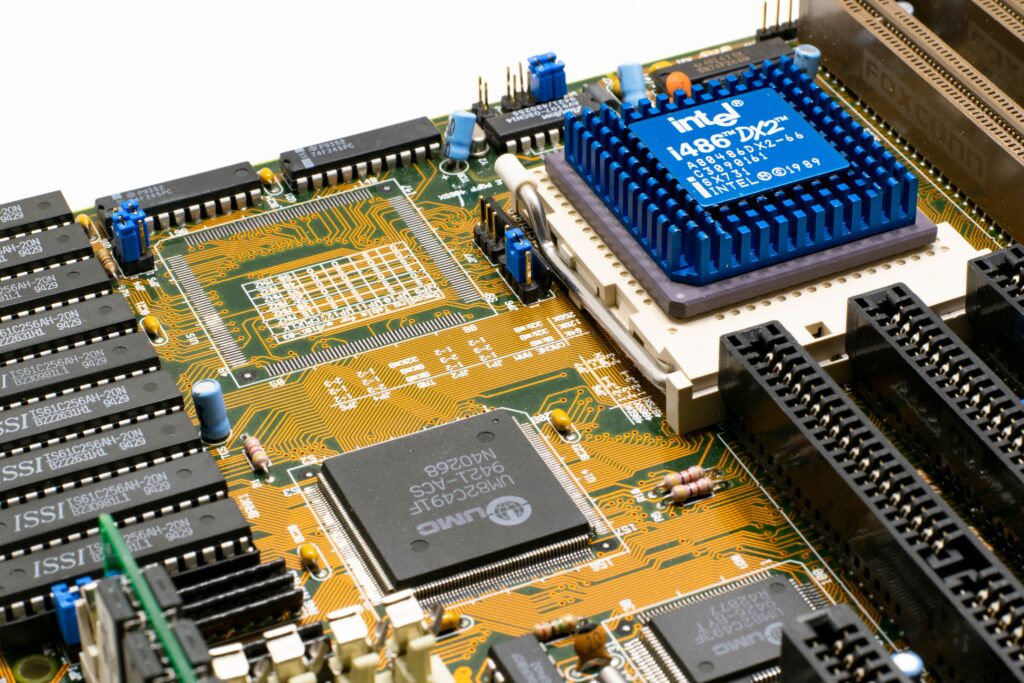
8. Intel’s Pentium FDIV Bug (1994)
Estimated Financial Loss: $475 Million
The Flaw: Lookup table missing entries in floating-point hardware.
In 1994, a mathematics professor discovered that Intel’s premier Pentium processor made tiny errors when performing floating-point division calculations (such as dividing 4195835 by 3145727). The flaw was baked directly into the silicon hardware: five entries were missing from a lookup table used by the chip’s division algorithm.
Intel initially minimized the bug, arguing that an average user would only encounter the error once every 27,000 years. However, the public and the tech industry revolted against the lack of transparency. Mass consumer anxiety forced Intel to offer a no-questions-asked replacement policy for millions of processors, creating a near half-billion-dollar hit to their bottom line.

9. Citibank’s $900 Million UI Error (2020)
Estimated Financial Loss:$500 Million (Unrecovered funds)
The Flaw: Extremely confusing and counter-intuitive Enterprise User Interface.
In August 2020, Citibank subcontractors were tasked with sending a routine $7.8 million interest payment to cosmetics giant Revlon’s creditors. The software being used was Flexcube, an enterprise banking system.To execute the transaction correctly, the user had to check three specific, poorly labeled boxes (“Front,” “Fund,” and “Principal”) to route the money correctly. Believing that checking “Principal” would route the money internally, the employee left it checked. Instead, the system interpreted this as a command to pay off the entire principal loan balance early. Citibank accidentally wired $900 million of its own cash. While some creditors returned the money, others legally refused, and a federal judge ruled that because the interface sent a seemingly valid payment, the creditors were under no obligation to return the remaining $500 million.

10. NASA’s Mars Climate Orbiter (1999)
Estimated Financial Loss: $125 Million
The Flaw: Basic unit conversion failure.
[Lockheed Martin Software] —> Outputs: Pound-Force Seconds (lbf·s)
|
(No Conversion Unit in Pipeline)
v
[NASA Navigation Software] —> Expects: Newton-Seconds (N·s)
In September 1999, the Mars Climate Orbiter approached the red planet to begin its atmospheric study. Instead of stabilizing its orbit, the spacecraft vanished.An investigation uncovered a jaw-dropping failure of integration testing: a subcontractor team at Lockheed Martin had programmed the thruster control software to output performance metrics in Imperial units (pound-force seconds). Meanwhile, NASA’s core navigation team wrote their software expecting Metric units (newton-seconds). Because nobody verified the units across the software pipeline, the spacecraft calculated its trajectory with an error margin of a factor of 4.45. It entered the Martian atmosphere way too low and was instantly incinerated by atmospheric friction.