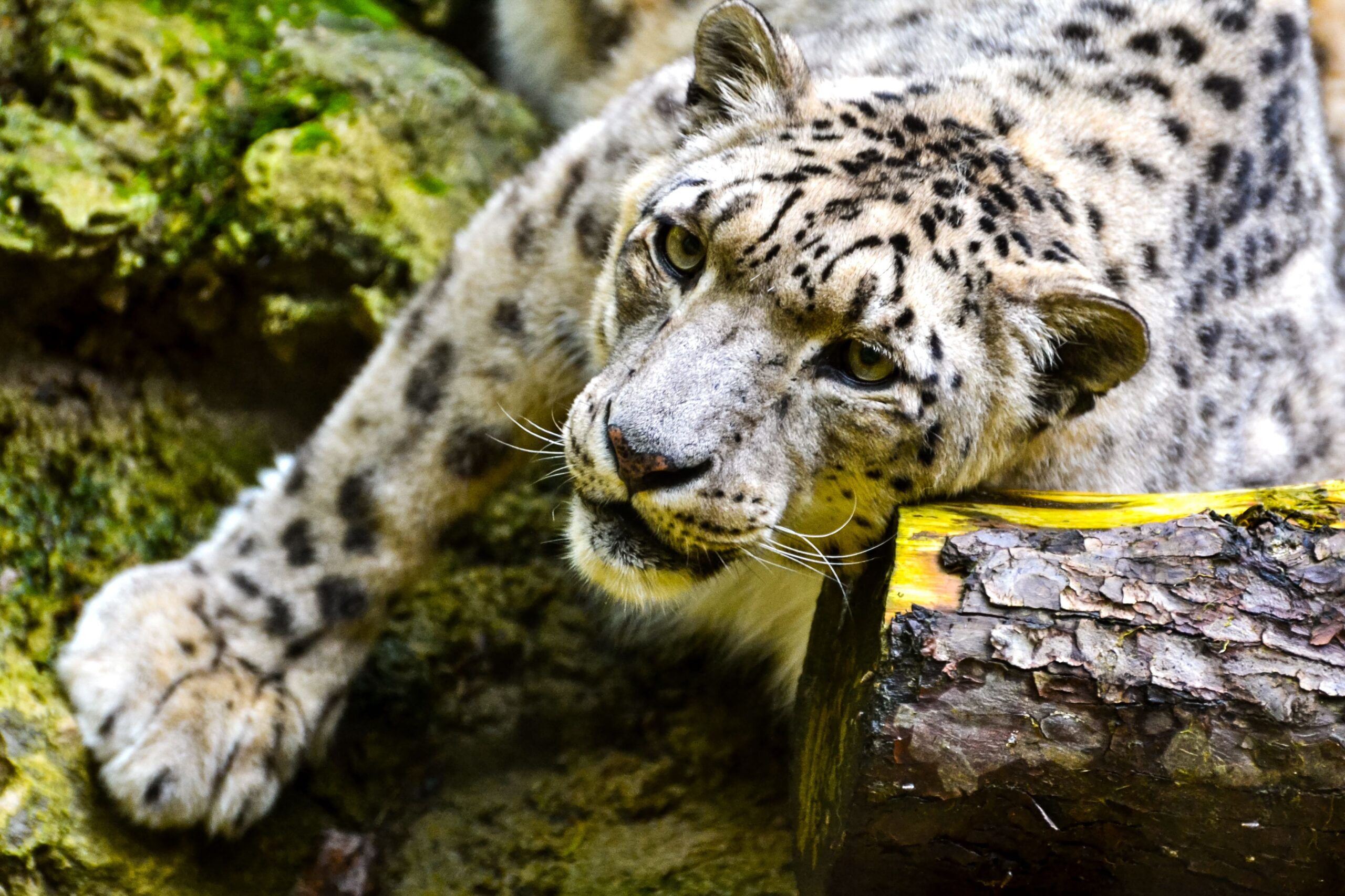
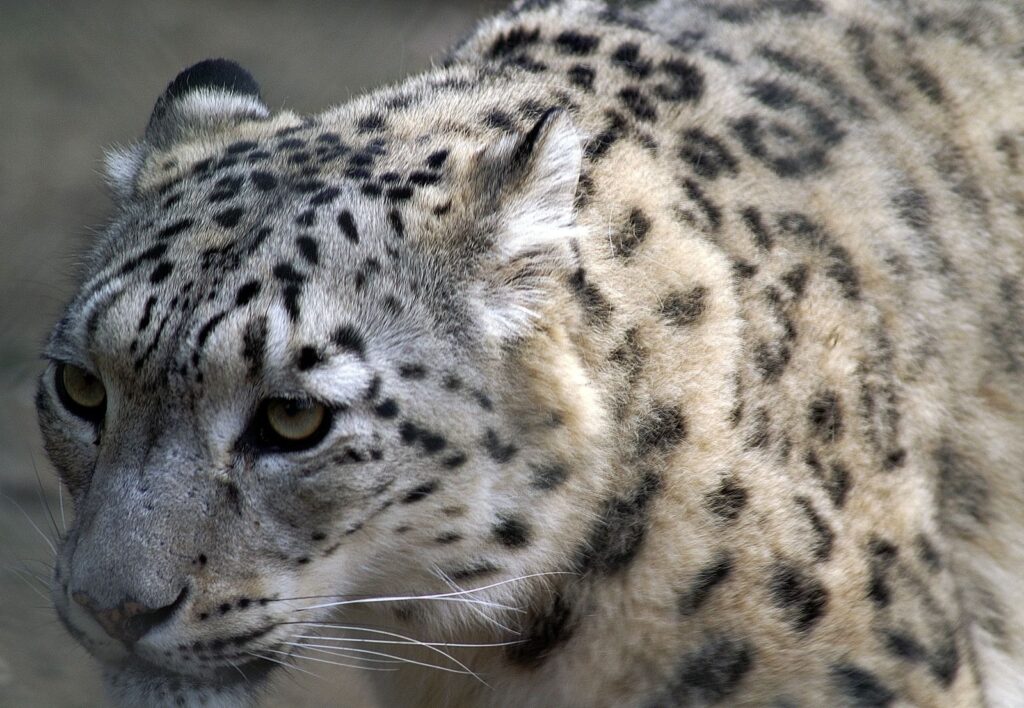
Here is a detailed, scannable look into the biology, incredible winter adaptations, and secretive lives of snow leopards (Panthera uncia), affectionately known as the “ghosts of the mountains.”
🏔️ High-Altitude Anatomy & Winter Adaptations
1. Built-In Snowshoes
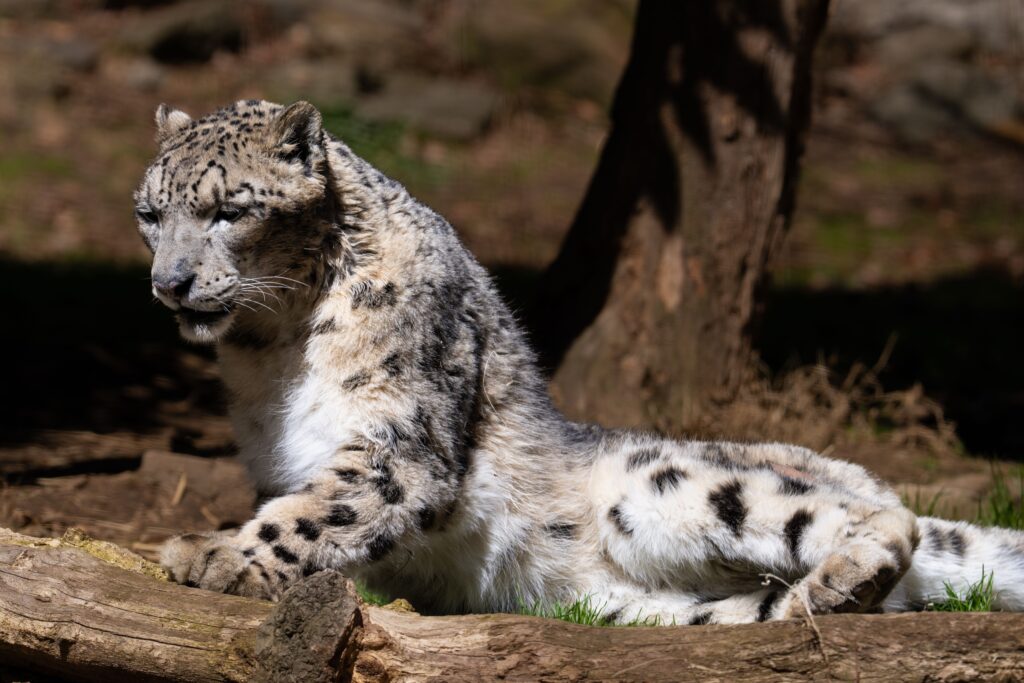
Snow leopards have exceptionally large, wide paws that act as natural snowshoes. The underside of their paws is covered in a thick layer of fur, which helps distribute their weight evenly across soft snow, prevents them from sinking, and protects their paw pads from the biting cold of frozen rocks.
2. A Swiss-Army Tail
A snow leopard’s tail is nearly as long as its entire body, measuring up to 1 meter (3.3 feet). This thick, fat-heavy tail serves two critical purposes: it acts as a vital counterbalance when navigating treacherous, narrow cliff edges, and it functions as a built-in blanket that the cat wraps around its face and nose to trap warmth while sleeping.
3. High-Efficiency Respiration
Living at altitudes up to 5,500 meters (18,000 feet) means surviving in thin, oxygen-poor air. To cope, snow leopards have evolved a short but exceptionally deep nasal cavity and wide chest. The specialized nasal passages warm the freezing mountain air before it hits their lungs, preventing internal tissue damage.
4. Woolly, High-Density Coats
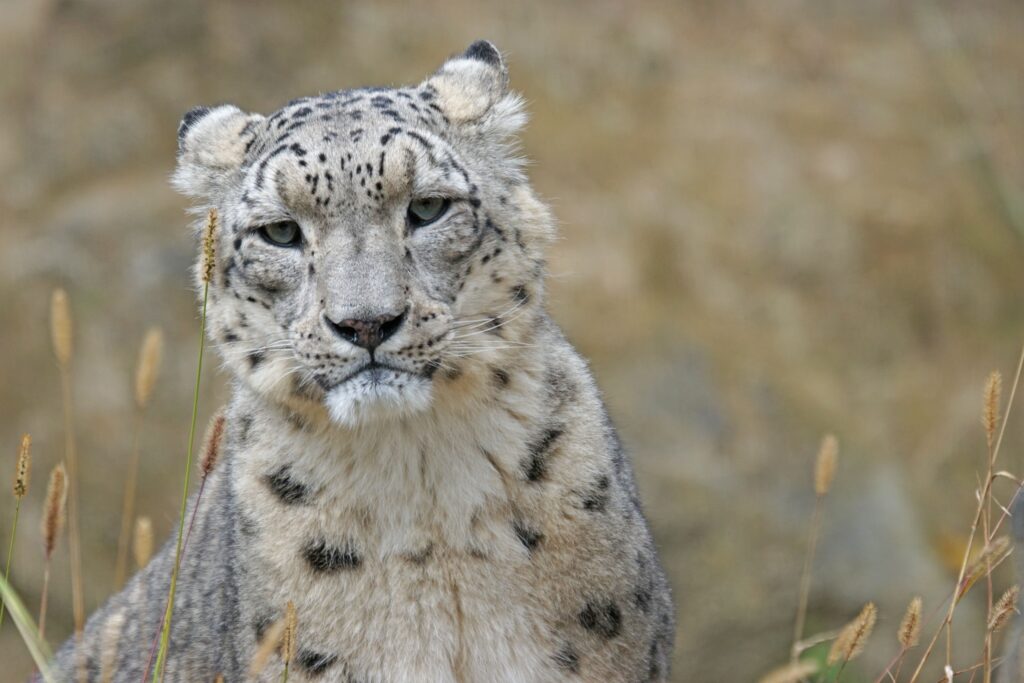
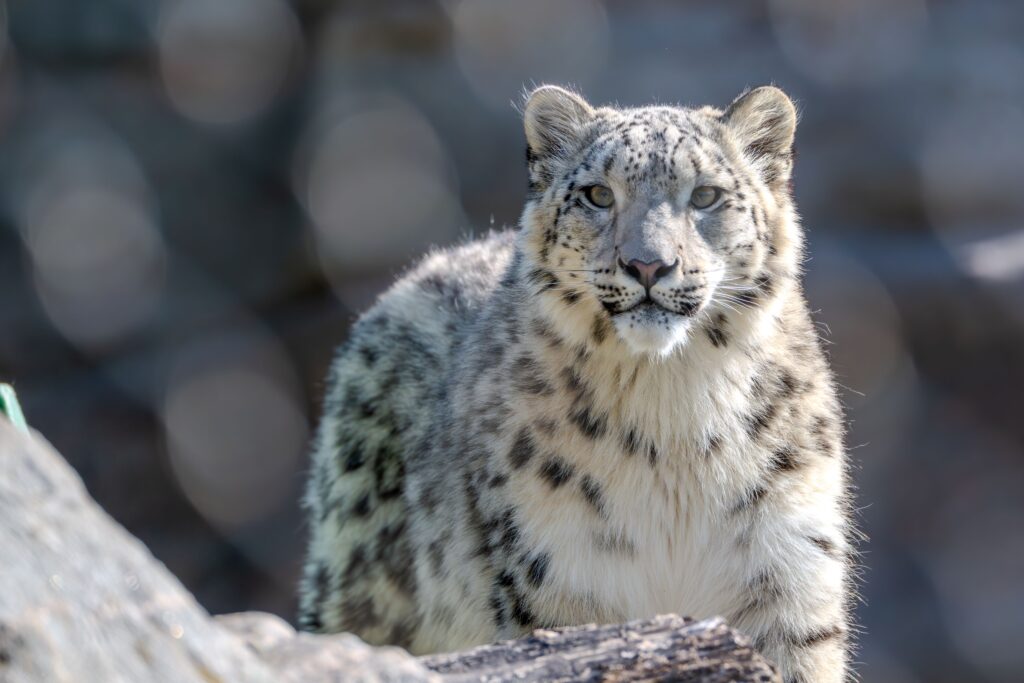
To survive temperatures that drop below -40°C (-40°F), they possess some of the densest fur in the animal kingdom. Their belly fur can be up to 12 cm (4.7 inches) thick. The coat features a dense, woolly under-layer to trap body heat and a longer outer-layer to repel wind and light moisture.
5. Shorter Limbs for Steep Climbs
Unlike low-land leopards, snow leopards have relatively short front legs and highly muscular, elongated hind legs. This unique skeletal structure is optimized for high-power upward propulsion, allowing them to scale near-vertical rock faces with absolute ease.
🎯 Athleticism & Hunting Tactics
6. World-Class Leaping Ability
Thanks to their hyper-developed hind legs, snow leopards are arguably the best jumpers of all the big cats. They can effortlessly leap horizontally up to 15 meters (50 feet) in a single bound—a crucial skill when jumping across deep mountain chasms to chase prey.
7. The Controlled Cliff-Tumble
When hunting on steep mountain slopes, snow leopards frequently launch themselves off cliffs onto their prey. It is common for a snow leopard and its target to tumble hundreds of feet down a jagged rocky slope together during a struggle; the cat’s dense muscle and thick fur cushion it from sustaining fatal injuries.
8. Primary Alpine Menu
Their primary prey consists of wild mountain sheep and goats, most notably the Bharal (Himalayan blue sheep) and the Asiatic Ibex. A single adult blue sheep provides enough meat to sustain a snow leopard for an entire week, during which it will aggressively guard the carcass from scavengers.
9. Casual Veggie Additions
In a strange twist for an obligate carnivore, snow leopards consume a significant amount of vegetation compared to other big cats. Studies of their scat routinely reveal twigs, grass, and willow shrubs. Biologists believe they eat plants to help digest coarse fur and bone fragments or to acquire specific minerals.
🗣️ Behavior & Hidden Communication
10. The Big Cat That Cannot Roar
Despite belonging to the subfamily Pantherinae, snow leopards lack the specialized, flexible larynx and thick vocal cords required to produce a true, booming roar. Instead, they communicate using a high-pitched snort called a chuff (or prusten), alongside deep growls, hisses, and a distinctive, haunting mewing sound.
11. The “Ghost of the Mountains”
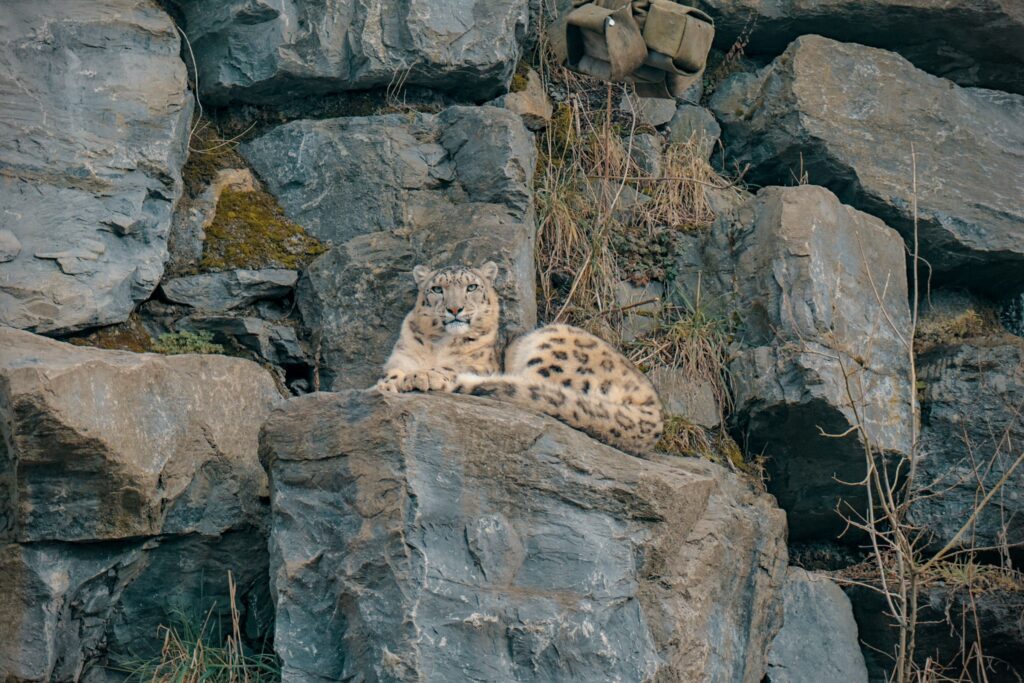
They are so highly elusive, solitary, and perfectly camouflaged against gray rocks and white snow that they are rarely seen by humans in the wild. Local communities and researchers have long called them the “ghosts of the mountains” because you almost never see them before they melt back into the landscape.
12. Chemical Scent-Posts
Because their mountain home ranges are vast and rugged—sometimes spanning over several hundred square kilometers—snow leopards rely heavily on chemical messaging. They leaves deep scrapes in the dirt along established mountain ridges and spray urine against large, overhanging boulders to mark their territory boundaries.
🍼 Reproduction & Lifecycle
13. Strongly Seasonal Breeding
Unlike tropical big cats that can breed year-round, snow leopards have a strict mating window between January and March. This timing ensures that their cubs are born in late spring or early summer (May to June), when the weather is milder and mountain prey is more abundant.
14. Completely Fur-Lined Dens
When a pregnant female is ready to give birth, she seeks out a highly secluded cave or rocky crevice. To prepare a safe, warm environment for her blind, helpless cubs, she plucks the softest woolly fur directly from her own underbelly to line the floor of the den.
15. Extended Mountain Training
A mother raises her 1 to 3 cubs completely alone without any help from the male. The cubs stay with her for up to 18 to 22 months, navigating incredibly treacherous terrain and learning the highly complex art of stalking agile mountain goats along cliff edges before dispersing to find their own territory.
🌍 Species Status & Geography
16. The “Third Pole” Territory
Snow leopards are native across the vast, rugged mountain ranges of Central and South Asia. Their habitat spans 12 different countries, including the Himalayas of India, Nepal, and Bhutan, the Hindu Kush of Pakistan, the Altai Mountains of Mongolia, and the massive Tibetan Plateau in China.
17. Reclassified but Still Vulnerable
In late 2017, the International Union for Conservation of Nature (IUCN) officially changed the snow leopard’s status from “Endangered” to “Vulnerable.” While this was a positive sign showing that conservation efforts were working, their total wild population remains low, estimated between roughly 4,000 to 6,500 individuals.
18. The Retaliatory Killing Threat
One of the greatest threats to their survival is human-wildlife conflict. As wild prey populations decline due to overgrazing by domestic animals, hungry snow leopards are forced to target domestic livestock like yaks and sheep. In response, local herders often kill the cats to protect their livelihoods.
19. Climate Change and “Squeezed” Habitats
Climate change poses a severe threat to their specific alpine ecosystem. As global temperatures rise, the tree line is shifting upward into higher altitudes. This squeezes the snow leopard’s open alpine habitat, forcing them into smaller, fragmented mountain peaks and closer to human settlements.
20. The Global Snow Leopard & Ecosystem Protection Program (GSLEP)
Because snow leopards regularly cross international borders along mountain ranges, they are protected under a unique, historic multi-nation alliance called GSLEP. This program brings all 12 range countries together to coordinate anti-poaching laws, secure vital mountain corridors, and support community-based conservation initiatives for herders.