
Throughout history, high-stakes thieves have targeted some of the most culturally significant, visually stunning, and mind-bogglingly valuable treasures on Earth. While some of these items were eventually recovered, others have vanished into the criminal underworld forever.
Based on historical significance and estimated market values, here are details on 10 of the most expensive objects ever stolen

1. The Mona Lisa by Leonardo da Vinci
Estimated Value: Over $2 billion
The Theft: In August 1911, an Italian carpenter and museum handyman named Vincenzo Peruggia pulled off what Guinness World Records recognizes as the most valuable individual object theft in history. Dressed in white worker overalls, Peruggia hid overnight in a Louvre closet, slipped the painting under his smock the next morning, and walked right out the door.
The Aftermath: The painting sat hidden in his modest Paris apartment for over two years while a global media frenzy actually helped skyrocket the artwork into the international icon it is today. Peruggia was finally caught in 1913 when he traveled to Florence and attempted to sell the masterpiece to an art dealer, claiming he wanted to return it to its Italian homeland.
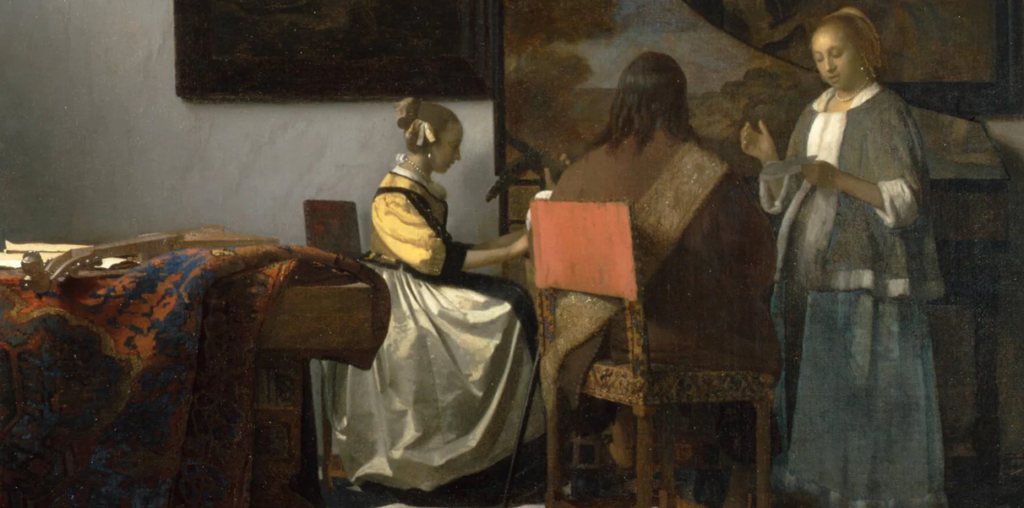
2. The Concert by Johannes Vermeer
Estimated Value: Over $200 million
The Theft: In March 1990, two thieves disguised as Boston police officers talked their way into the Isabella Stewart Gardner Museum in the middle of the night. After tying up the security guards, they spent 81 minutes systematically slicing and removing 13 works of art—a haul that is collectively worth over $500 million, making it the largest property theft in U.S. history.
The Aftermath: While works by Rembrandt and Degas were also taken, Vermeer’s The Concert is by far the most valuable of the bunch. Despite an active FBI investigation and a $10 million reward, the empty frames still hang on the museum walls today, and the painting remains entirely missing.
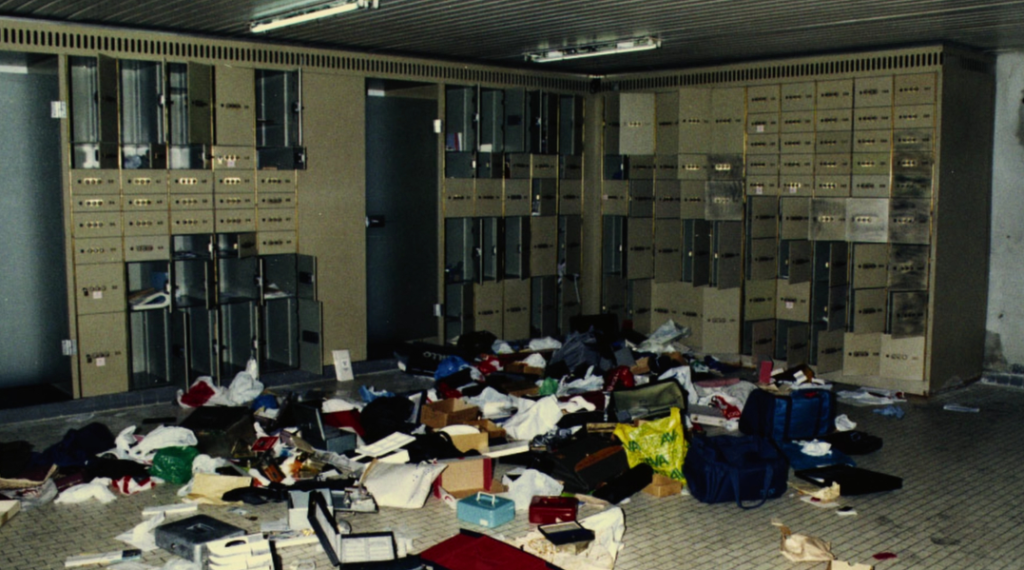
3. The Antwerp Diamonds
Estimated Value: Over $100 million (£80+ million)
The Theft: Dubbed the “heist of the century,” a highly organized Italian crew known as the “School of Turin,” led by Leonardo Notarbartolo, infiltrated the vault of the Antwerp Diamond Centre in Belgium in February 2003. The vault was deemed completely impenetrable, protected by combination locks, infrared heat detectors, Doppler radar, seismic sensors, and a magnetic field alarm.
The Aftermath: The thieves successfully bypassed all security measures without triggering any alarms and cleaned out 123 of the 160 safe deposit boxes, stealing loose diamonds, gold, and jewelry. Notarbartolo was eventually caught via DNA left on a half-eaten sandwich near the crime scene and sentenced to prison, but the vast majority of the diamonds have never been found.

4. The Amber Room
Estimated Value: Over $300 million to $500 million (in modern valuation equivalents)
The Theft: Originally constructed in Prussia in the early 18th century and gifted to Tsar Peter the Great, the Amber Room was a breathtaking 180-square-foot chamber inside the Catherine Palace near St. Petersburg. It was completely lined with six tons of genuine amber panels, backed by gold leaf, and encrusted with gemstones. In 1941, during World War II, Nazi forces dismantled the entire room in less than 36 hours, packed it into 27 crates, and shipped it to Königsberg Castle.
The Aftermath: As Allied bombing closed in on Königsberg in 1945, the room disappeared entirely. Whether it was destroyed by fires, hidden in an undiscovered underground bunker, or sunk to the bottom of the Baltic Sea remains a massive mystery. Decades later, the Russian government completely reconstructed a replica of the room from scratch.
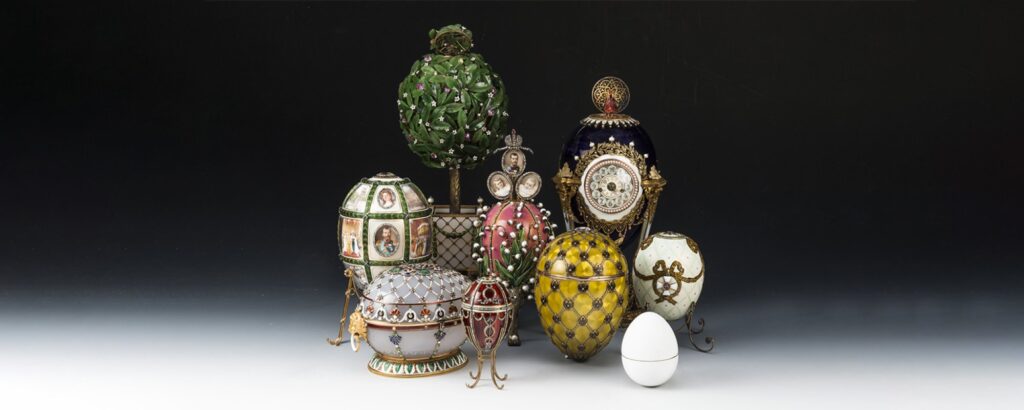
5. Imperial Fabergé Eggs
Estimated Value: $25 million to $35 million each
The Theft: Between 1885 and 1917, the House of Fabergé created 50 masterfully encrusted, jewel-filled Easter eggs exclusively for the Russian Royal Family. During the Bolshevik Revolution of 1917, the Romanov palaces were looted, and the Bolshevik revolutionaries seized the eggs, packing them away or selling them off on the black market.
The Aftermath: While most were eventually tracked down or preserved in museums, eight of the original eggs completely vanished into thin air. Only one of the missing eight has ever been recovered: in 2012, a scrap metal dealer in the American Midwest bought a golden egg for $14,000 to melt it down, only to look it up online and realize he was holding the Third Imperial Fabergé Egg, which later sold to a private collector for an estimated £25 million. Seven remain unaccounted for.
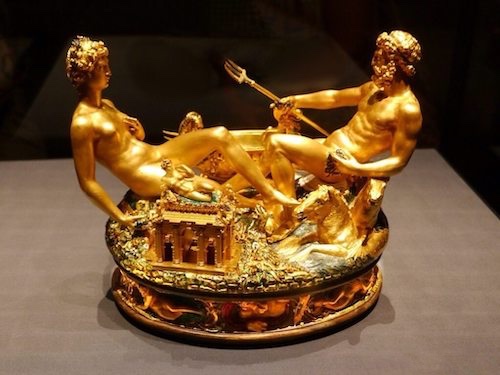
6. The Cellini Salt Cellar (Saliera)
Estimated Value: Around $57 million
The Theft: The Saliera is a brilliant 10-inch gold sculpture crafted in the 16th century by Renaissance artist Benvenuto Cellini for King Francis I of France, intentionally designed as a functional luxury container to hold salt and pepper. In May 2003, while parts of the Kunsthistorisches Museum in Vienna were covered in scaffolding, a security alarm went off. Guards assumed it was a false alarm and deactivated it, allowing a thief to climb through a window, smash the glass case, and steal the sculpture.
The Aftermath: The thief hid the priceless sculpture in his home for a few years and even buried it inside a plastic box in an Austrian forest. He eventually turned himself in to the police in 2006, leading to the successful recovery of the undamaged artifact.
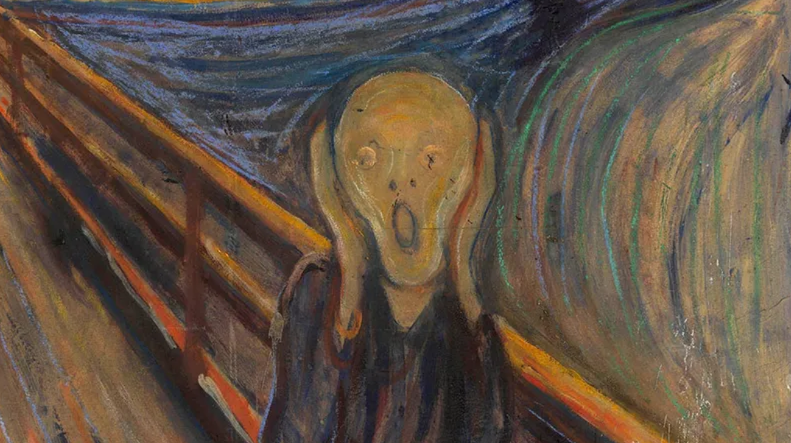
7. The Scream by Edvard Munch
Estimated Value: Over $110 million to $120 million
The Theft: Edvard Munch created multiple versions of The Scream, and the masterpiece has incredibly been stolen twice. In 1994, thieves broke into the National Gallery in Oslo, stole a version, and brazenly left a note reading, “Thanks for the poor security”. Ten years later, in August 2004, masked, armed gunmen walked straight into the Munch Museum in broad daylight, ripped another version of The Scream and Munch’s Madonna off the walls, and fled in a getaway car.
The Aftermath: The 1994 theft was solved within three months using an undercover sting operation. The 2004 armed heist version was missing for two years, prompting fears it had been burned, before Norwegian police successfully recovered it in 2006 with only minor moisture damage.
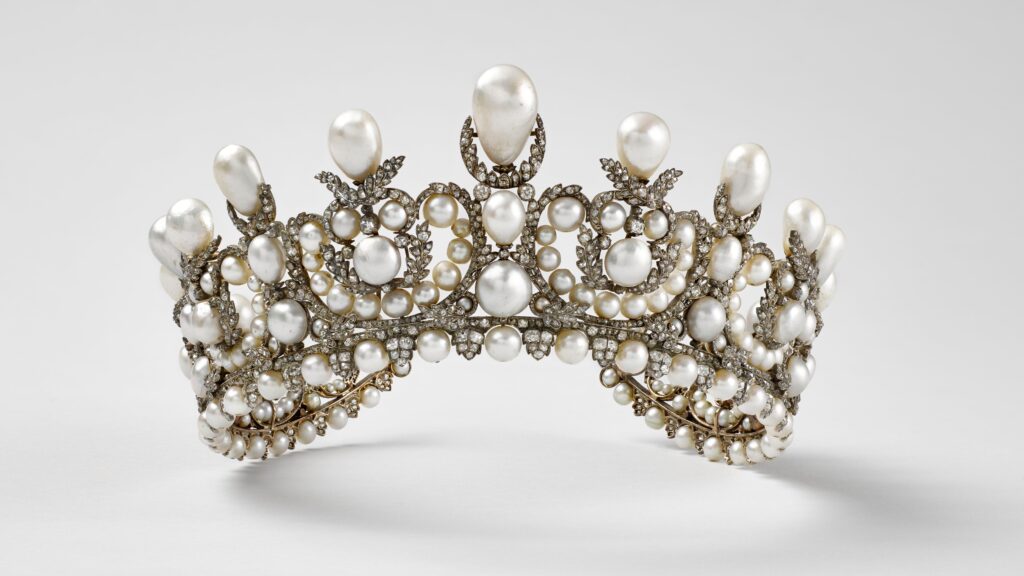
8. The French Crown Jewels (The Louvre Heist)
Estimated Value: Tens of millions of dollars/euros
The Theft: In a highly sophisticated heist at the Louvre Museum, a thief or network of thieves breached the security of the historic collection of French royal ornaments. The stolen cache included a magnificent sapphire tiara, necklace, and earring set belonging to Queen Marie-Amélie, alongside an emerald set belonging to Empress Marie Louise, a pearl-and-diamond tiara once worn by Empress Eugénie, and a reliquary brooch.
The Aftermath: The items are considered practically priceless due to their irreplaceable placement in French royal history. During the frantic escape, the thieves actually dropped the crown of Empress Eugénie onto the pavement, heavily damaging it but leaving it behind for the museum to recover.

9. Dorothy’s Ruby Slippers (The Wizard of Oz)
Estimated Value: $28 million to $32.5 million
The Theft: Only a few pairs of the iconic ruby slippers worn by Judy Garland in the 1939 classic The Wizard of Oz are known to exist. In 2005, a thief used a hammer to smash through a glass display case at the Judy Garland Museum in Grand Rapids, Minnesota, stealing a pair on loan to the facility.
The Aftermath: The slippers remained completely missing for 13 years despite a massive $1 million reward offered by an anonymous donor. The FBI finally recovered them during a high-stakes sting operation in 2018. When the recovered slippers later went up for auction, they pulled in an astronomical $28 million ($32.5 million with fees included), shattering records for movie memorabilia.

10. The Davidoff-Morini Stradivarius Violin
Estimated Value: Over $3 million to $5 million
The Theft: Crafted in 1727 by the legendary master luthier Antonio Stradivari, this incredibly rare violin was named after the renowned cellist Karl Davidoff. In October 1995, the instrument was stolen directly from the New York City apartment of its owner, the world-renowned 91-year-old concert violinist Erica Morini.
The Aftermath: In a heartbreaking twist, Morini was on her deathbed in a hospital at the time of the burglary; her family chose to keep the theft a secret, and she passed away days later never knowing her beloved instrument was gone. Despite being cataloged on the FBI’s Top Ten Art Crimes list, the instrument has never been recovered and remains missing to this day.