The Majestic World of Panthera leo: An Evolution in Apex Predator Biology
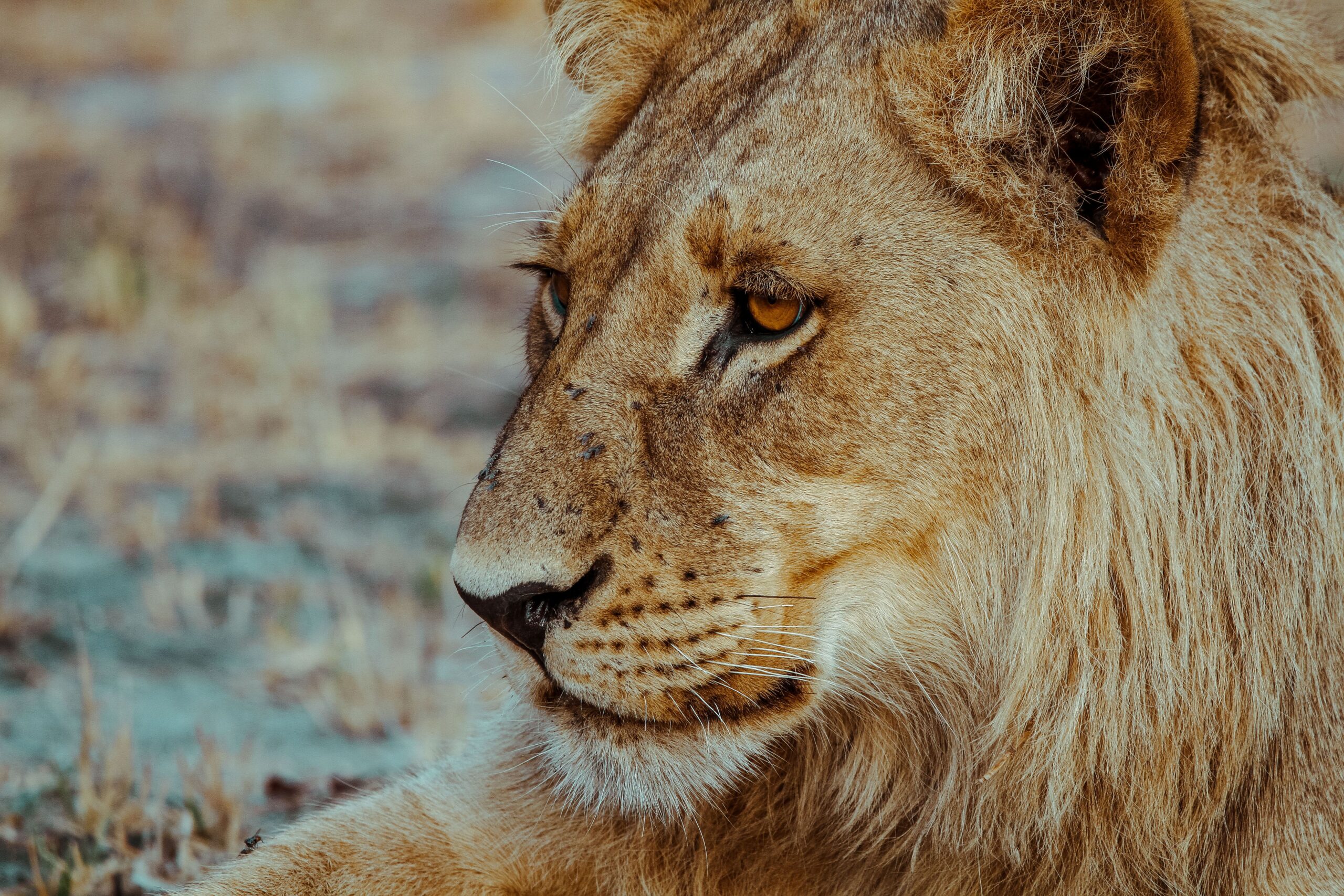
Lions (Panthera leo) have captured human imagination for millennia, serving as universal symbols of strength, courage, and majesty. Yet, beyond their cultural iconography lies a highly sophisticated, evolutionary masterpiece. As the only truly social felines on Earth, lions have adapted a unique lifestyle that balances complex group dynamics with hyper-specialized physical traits, securing their position as the undisputed apex predators of the African savannas and fragments of the Indian subcontinent.
🦁 Social Structure & Pride Dynamics
1. The Only Truly Social Cats
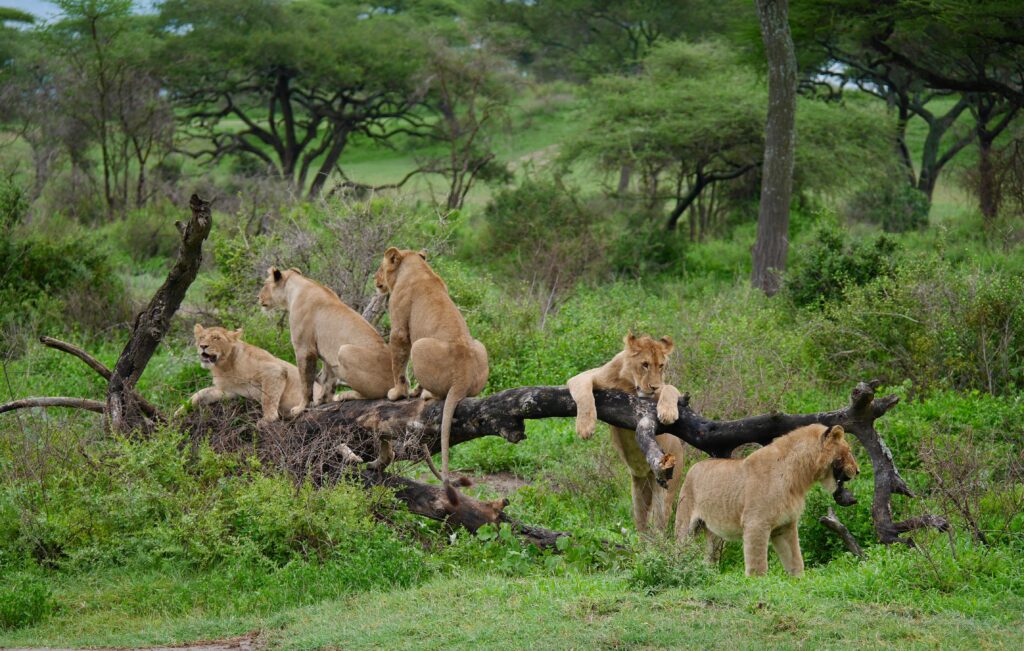
- Unlike almost all other felids (like tigers, leopards, or jaguars) who are solitary hunters, lions live in dedicated social groups called prides. A pride functions as a tight-knit community, which drastically increases their survival rate in harsh environments.
2. Female-Dominated Societies
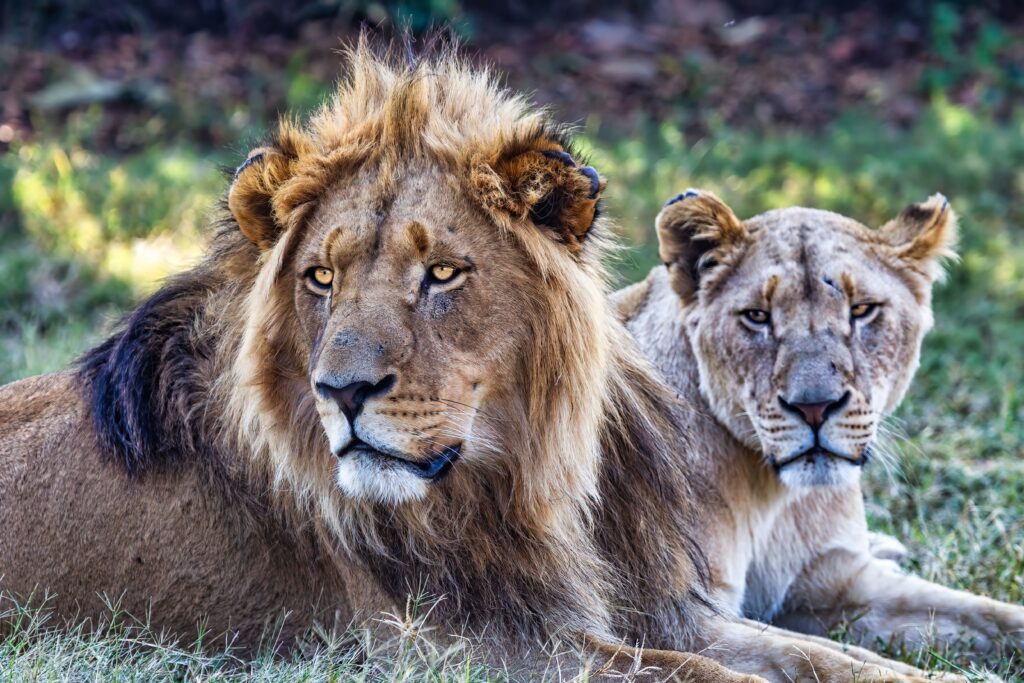
- A pride is fundamentally built around a core of related females (mothers, daughters, sisters, and aunts). These lionesses stay within their natal pride for life, meaning the true foundation of any pride is a generational matriarchy.
3. Coalition Power
- Prides do not have a single “king.” Instead, a coalition of 2 to 4 (and sometimes up to 6) allied adult males rule over a pride’s territory. These males are often brothers or half-brothers who fought together to take over the pride from older, weaker males.
4. Eviction of Young Males
- When young male cubs reach roughly 2 to 3 years of age, the dominant adult males forcefully evict them from the pride. These exiled youths become “nomads,” roaming the wilderness until they are strong enough to challenge another pride’s rulers.
🥩 Hunting & Diet
5. Coordinated Hunting Strategies
- Lionesses are the primary hunters of the pride. Because they are smaller and faster than males, they work in highly coordinated tactical formations. Some lionesses act as “wings” to herd the prey, while others lie in ambush along the center line to deliver the final strike.
6. The “Lion’s Share” Hierarchy
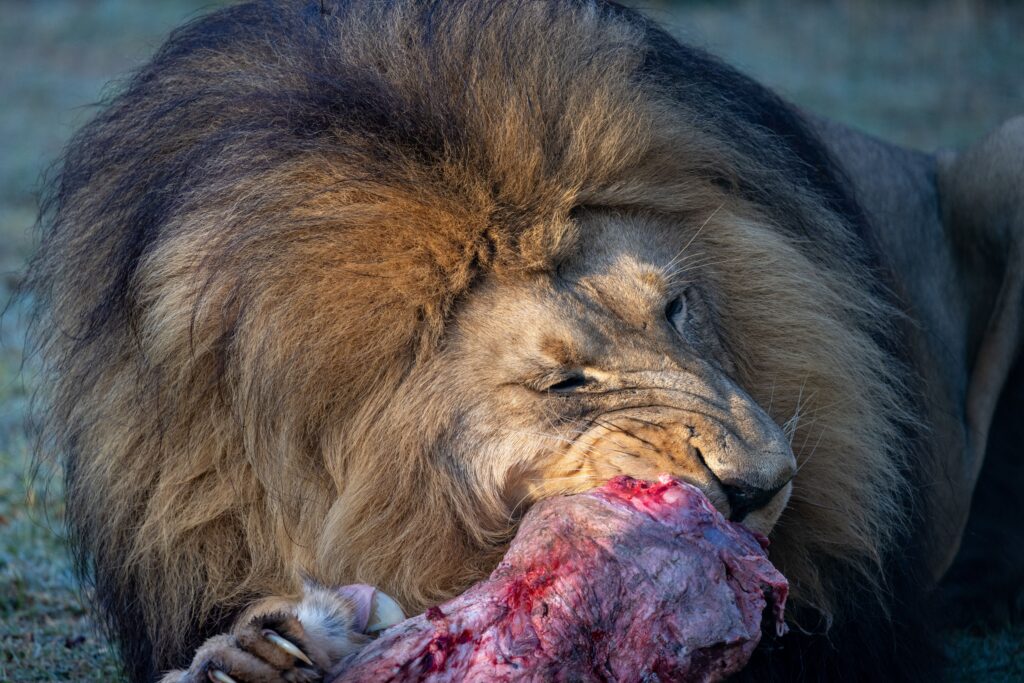
- Despite the females doing the vast majority of the dangerous hunting, a strict eating hierarchy exists. The dominant males always eat first, taking the choice cuts. Next come the lionesses, and finally, the cubs get the remaining scraps.
7. Massive Binge Eaters
- Lions live in a “feast or famine” world. A single adult male lion can gorge himself on up to 40 kg (90 lbs) of meat in a single sitting—roughly 15% to 20% of his entire body weight. After such a massive meal, they will fast for several days.
8. Opportunistic Scavengers
- While known as majestic hunters, lions are massive opportunists. They routinely steal kills from spotted hyenas, cheetahs, and leopards. In fact, a significant percentage of a lion’s diet in certain regions comes from scavenging rather than fresh hunting.
🧬 Anatomy & Physical Traits
9. The Mane Signifies Health and Age
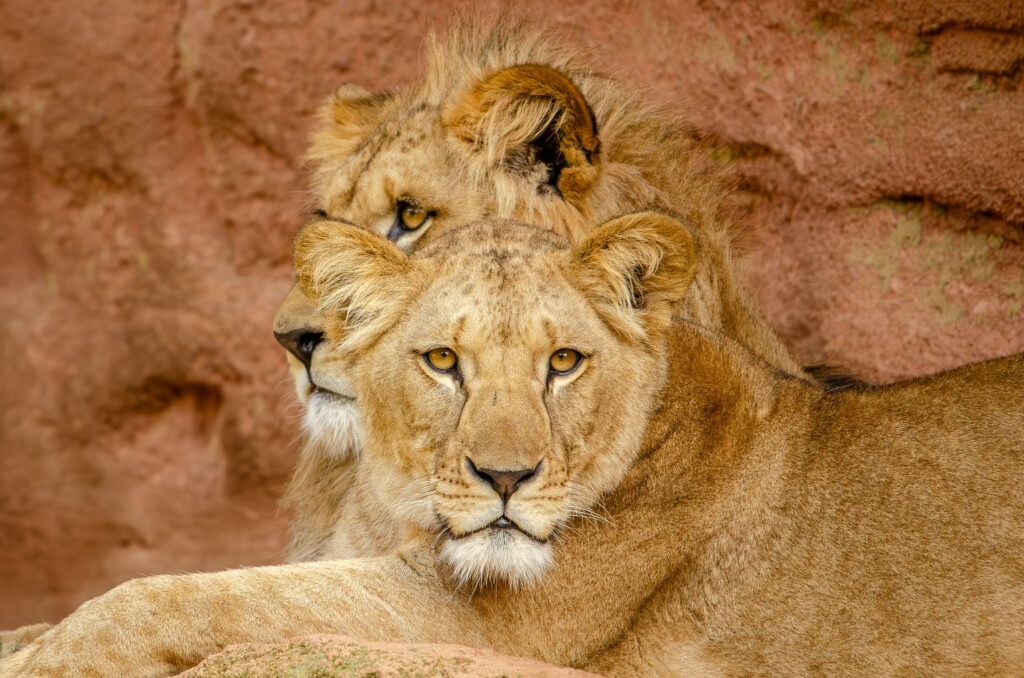
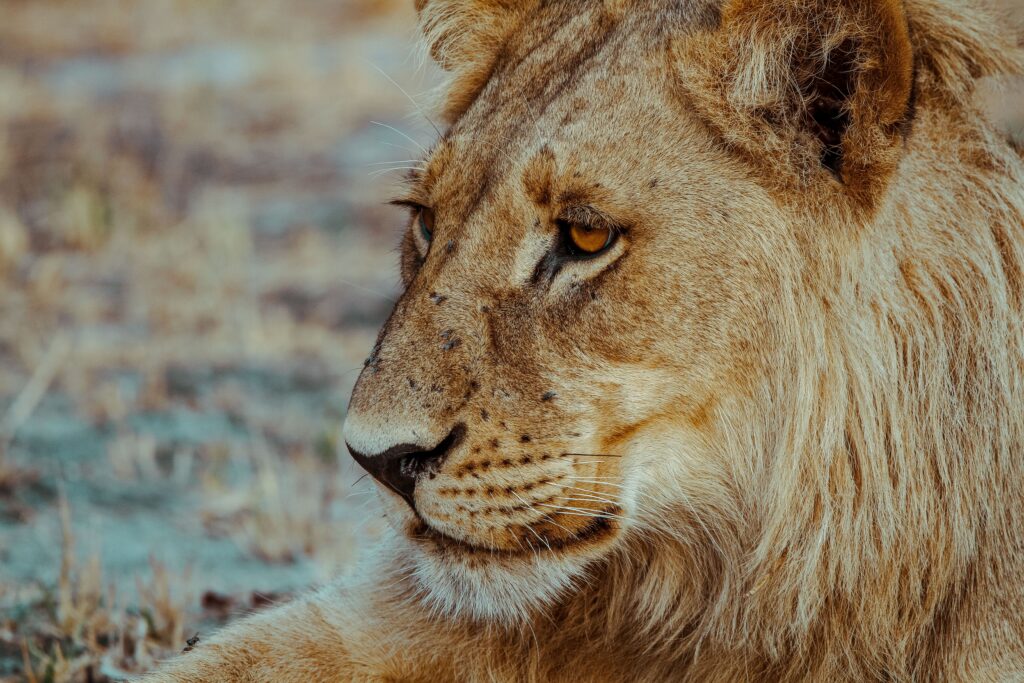
- A male lion’s mane is a direct indicator of his vigor. Darker, thicker manes are linked to higher testosterone levels, better health, and superior fighting capability. Lionesses actively prefer males with darker manes, while rival males are heavily intimidated by them.
10. Retractable Claws for Maximum Grip
- A lion’s claws can reach up to 10 cm (4 inches) in length. They are perfectly retractable, staying hidden inside sheaths of skin while walking to keep them razor-sharp and quiet. They are only extended when grabbing onto prey or climbing.
11. The Only Cat with a Tasseled Tail
- Lions are unique among cats for having a prominent dark tuft or tassel of hair at the end of their tail. This tuft often hides a small, spur-like bone. The tail is primarily used for balance during chases and signaling commands to other pride members during group hunts.
12. Incredible Night Vision
- Lions have a specialized layer of tissue at the back of their eyes called the tapetum lucidum. This acts like a mirror, reflecting even the faintest ambient light back through the retina. Their eyes need only one-sixth of the light that human eyes require to see perfectly in the dark.
💤 Behavior & Communication
13. Masters of Laziness
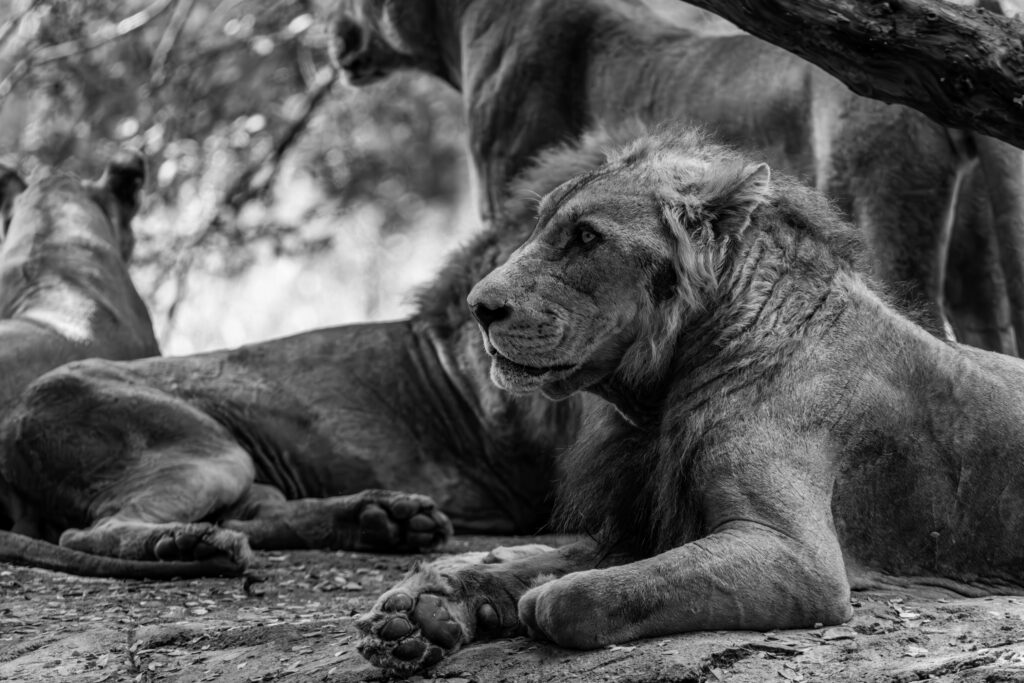
- Lions are among the sleepiest predators on earth, spending between 16 to 20 hours a day resting or sleeping. Because they lack efficient sweat glands (they only sweat through their paw pads), lounging in the shade is vital to conserve energy and regulate body temperature.
14. Thunderous Roars
- A lion’s roar is mechanically enhanced by a square-shaped vocal cord structure, unlike the round cords of humans. This allows their roar to reach volumes of up to 114 decibels, making it audible up to 8 kilometers (5 miles) away. It is used to signal territory boundaries and locate pride members.
15. Scent Marking and “Flehmen” Response
- Lions track territory boundaries using a chemical map. They spray urine on bushes and scrape the dirt with their paws (which possess scent glands). To analyze a rival’s scent, a lion will grimace, curl its upper lip, and open its mouth—a behavior called the Flehmen response—to pass the scent over their olfactory organs.
🍼 Reproduction & Lifecycle
16. Synchronized Birthing
- Lionesses within a pride often synchronize their reproductive cycles. This leads to communal birthing, where multiple mothers give birth around the same time. The cubs are raised together in a “crèche” (a nursery group), and lionesses will willingly nurse cubs that are not their own.
17. Brutal Infanticide
- When a new coalition of males forcefully takes over a pride, their first action is almost always to kill all existing cubs under a year old. This evolutionary drive forces the resident lionesses back into estrus (heat) within days, ensuring the new males can pass on their own genetics immediately.
18. Vulnerable Beginnings
- Newborn cubs are incredibly tiny, weighing only about 1.5 kg (3 lbs), and are born completely blind with spotted coats that help them camouflage in thick brush. They do not open their eyes until they are roughly 1 to 2 weeks old.
🌍 Species Status & Habitat
19. The “King of the Jungle” Misnomer
- Despite the popular idiom, lions do not live in jungles or rainforests. They are native to grasslands, savannas, dense scrub, and open woodlands. Their golden coats are designed to blend perfectly into dry savanna grasses, not dense tropical canopies.
20. The Fragmented Asian Remnant
- While the vast majority of wild lions live in sub-Saharan Africa, a small, critically endangered sub-species exists completely isolated in Asia. The Asiatic Lion (Panthera leo leo) survives only in India’s Gir Forest National Park, with a total population numbering just a few hundred individuals.