Measuring intelligence in the animal kingdom is one of the most complex challenges in modern evolutionary biology. For decades, scientists fell into the trap of anthropocentrism—evaluating animal intellect strictly by how well they could mimic human behaviors. Today, ethologists use a much broader framework, measuring intelligence through cognitive flexibility, abstract reasoning, self-awareness, social engineering, and symbolic communication.
When we strip away human bias, we discover minds capable of extraordinary mental feats. Here is a detailed, comprehensive look at the top 10 most intelligent animals on Earth (besides humans).
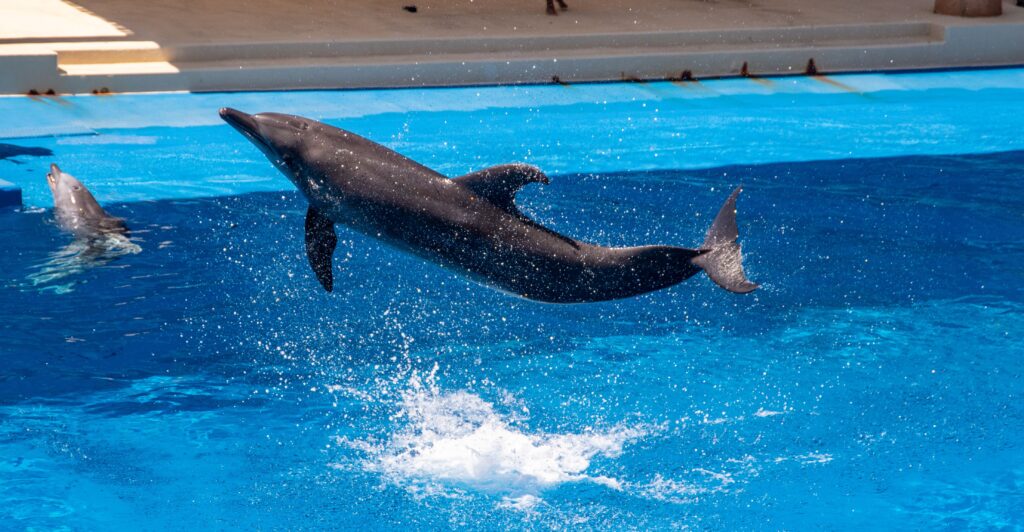
1. The Bottlenose Dolphin (Tursiops truncatus)
The Intelligence Metric: High encephalization quotient, self-awareness, and acoustic symbolic language.
The Cognitive Breakdown: Dolphins possess an Encephalization Quotient (EQ)—the ratio of brain size to expected body mass—second only to humans. Their neocortex contains highly complex folding, particularly in areas dedicated to emotional processing and social cognition.
Dolphins are among the elite few animals that pass the Mirror Self-Recognition (MSR) test, proving they possess an internal concept of “self.” Socially, they operate in complex “fission-fusion” societies, forming shifting alliances that require advanced social memory.
They communicate using a highly sophisticated system of click trains and whistles. Remarkably, each dolphin develops a unique “signature whistle” within its first year of life, which functions precisely like a human name. Other dolphins will mimic this specific whistle to call out to that individual or talk about them in their absence.
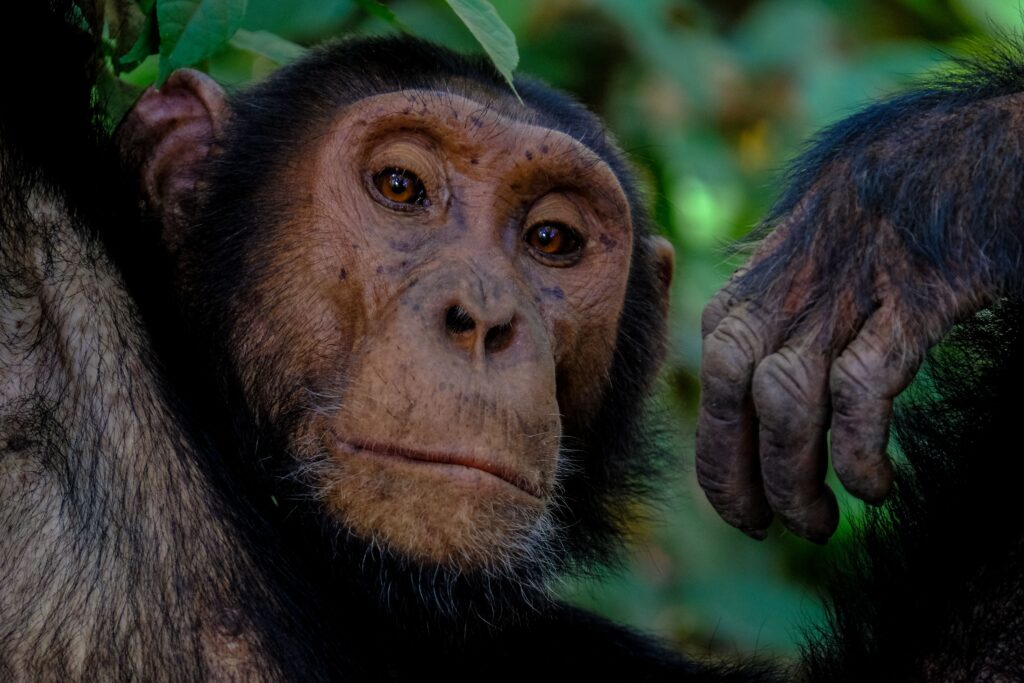
2. The Chimpanzee (Pan troglodytes)
The Intelligence Metric: Advanced tool manufacturing, numeric working memory, and cultural transmission.
The Cognitive Breakdown: Sharing roughly 99% of our DNA, chimpanzees display cognitive abilities that closely parallel our own. They don’t just use tools; they manufacture them. A chimp will strip leaves off a twig to create a fishing rod for termites, use heavy stones as hammers and anvils to crack nuts, and even sharpen sticks with their teeth to use as hunting spears.
In terms of raw visual working memory, chimpanzees can actually outperform humans. In famous cognitive trials at Kyoto University, chimpanzees were shown numbers from 1 to 9 scattered randomly on a screen for a fraction of a second.
When the numbers were instantly masked by blank squares, the chimps could tap the squares in the correct numerical order with flawless speed—a feat that completely confounds adult human test subjects. They also pass on knowledge generationally, establishing distinct regional “cultures” in the wild based on localized tool-use techniques.
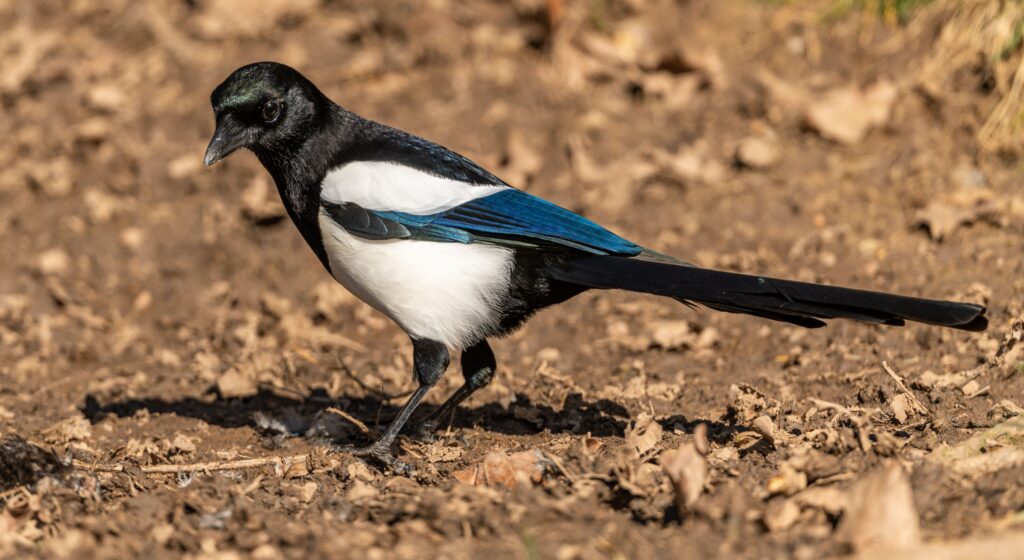
3. The Eurasian Magpie (Pica pica) & The New Caledonian Crow (Corvus moneduloides)
The Intelligence Metric: Meta-cognition, episodic-like memory, and multi-step causal reasoning.
The Cognitive Breakdown: Often called “feathered apes,” corvids (the family that includes crows, ravens, and magpies) possess brains packed with densely clustered neurons that compensate perfectly for their lack of a mammalian cerebral cortex. The Eurasian magpie holds the historic distinction of being the first non-mammal proven to pass the mirror self-recognition test.
The New Caledonian crow is the undisputed genius of causal reasoning. In laboratory settings, these birds have solved the famous “Aesop’s Fable” paradigm: recognizing that dropping heavy stones into a tube of water will raise the water level to bring a floating piece of food within reach.
Even more staggering, they can solve multi-step puzzles that require them to use a short tool to retrieve a medium-sized tool, which is then used to retrieve a long tool, which finally reaches the reward. They can even bend a completely straight piece of wire into a functional hook to retrieve food, demonstrating a sophisticated understanding of cause and effect.
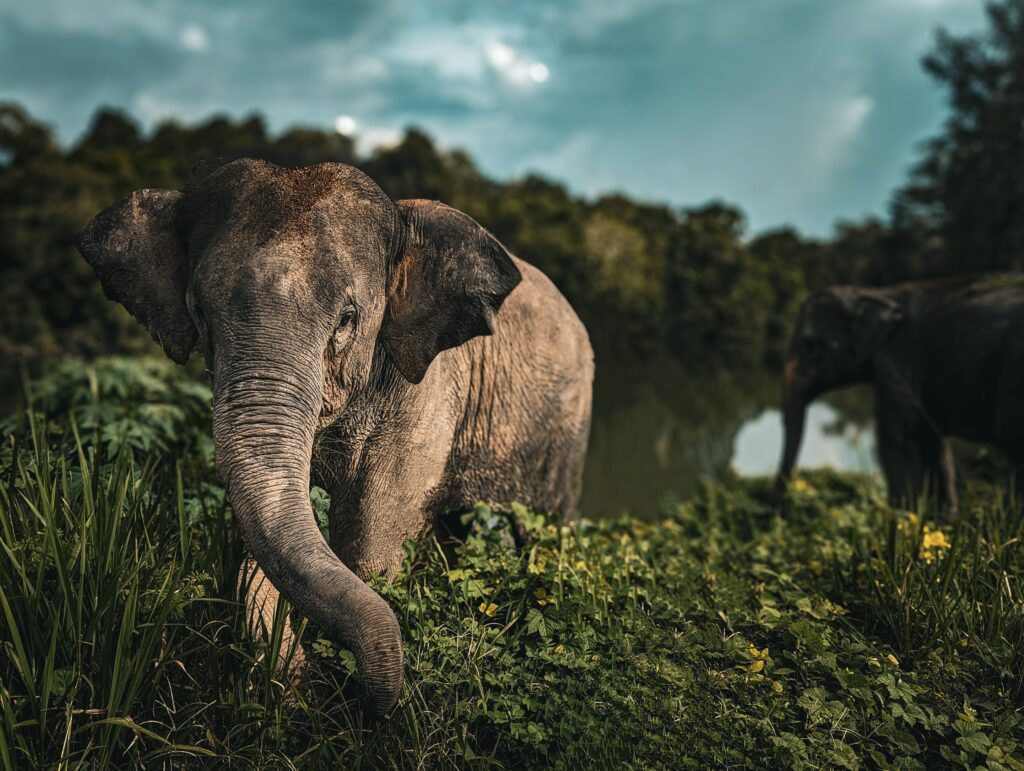
4. The Asian Elephant (Elephas maximus)
The Intelligence Metric: Profound empathy, grief processing, and complex spatial mapping.
The Cognitive Breakdown: Elephants possess the largest absolute brain mass of any terrestrial animal. Their temporal lobes—the regions responsible for memory and emotion—are exceptionally well-developed. This anatomical trait gives rise to their legendary long-term memory, allowing matriarchs to map out vast geographical networks of water holes and migratory routes over decades.
Elephants display a level of empathy and emotional intelligence rivaled only by humans. They are one of the few species known to exhibit thanatological behaviors (an interest in the dead).
When an elephant encounters the bones of a deceased relative, the herd will slow down, fall silent, and gently caress the skull and tusks with their trunks. They recognize mirrors, utilize therapeutic mud and vegetation to treat wounds, and can easily distinguish between different human languages and threat levels based purely on the acoustic frequencies of voices.
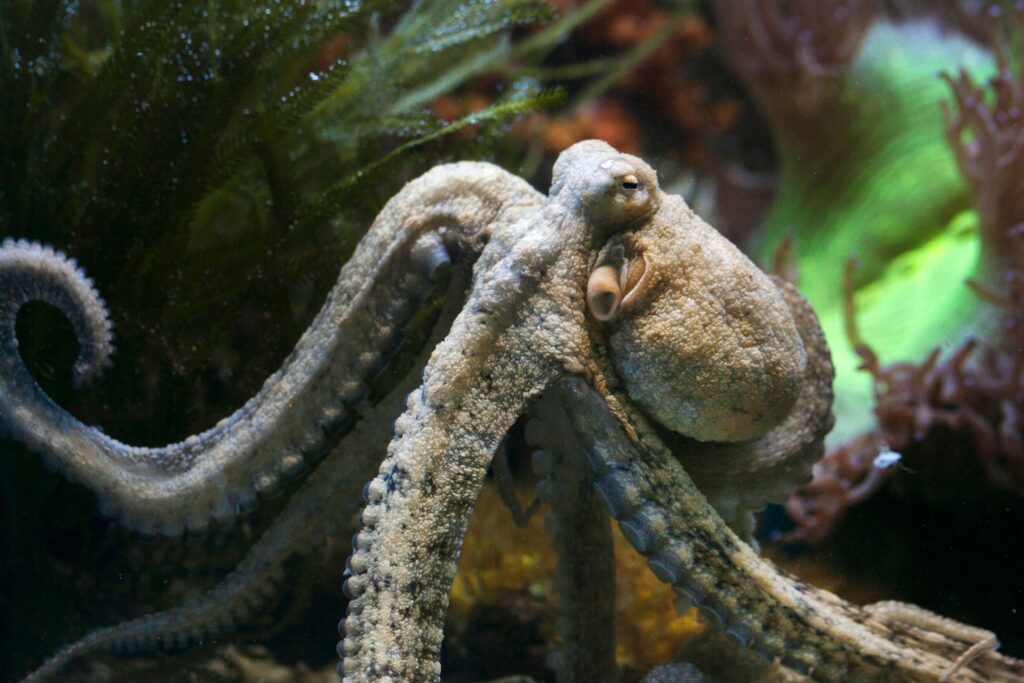
5. The Common Octopus (Octopus vulgaris)
The Intelligence Metric: Decentralized intelligence, spatial navigation, and mischievous problem-solving.
The Cognitive Breakdown: The octopus is the ultimate evolutionary wild card. While mammalian intelligence is centralized in the brain, two-thirds of an octopus’s neurons are distributed throughout its arms. Each arm can effectively “think,” taste, and touch completely independently of the central brain, representing a radical form of decentralized intelligence.
Despite being short-lived invertebrates, octopuses exhibit astonishing problem-solving skills. In captivity, they quickly learn to unscrew child-proof jars to retrieve crabs, navigate intricate mazes, and remember individual human faces—treating friendly keepers differently than those who disrupt them.
They are notorious for engineering escapes from public aquariums, short-circuiting lights by deliberately spraying jets of water at electrical outlets, and sneaking into neighboring tanks at night to hunt before returning to their own enclosures.
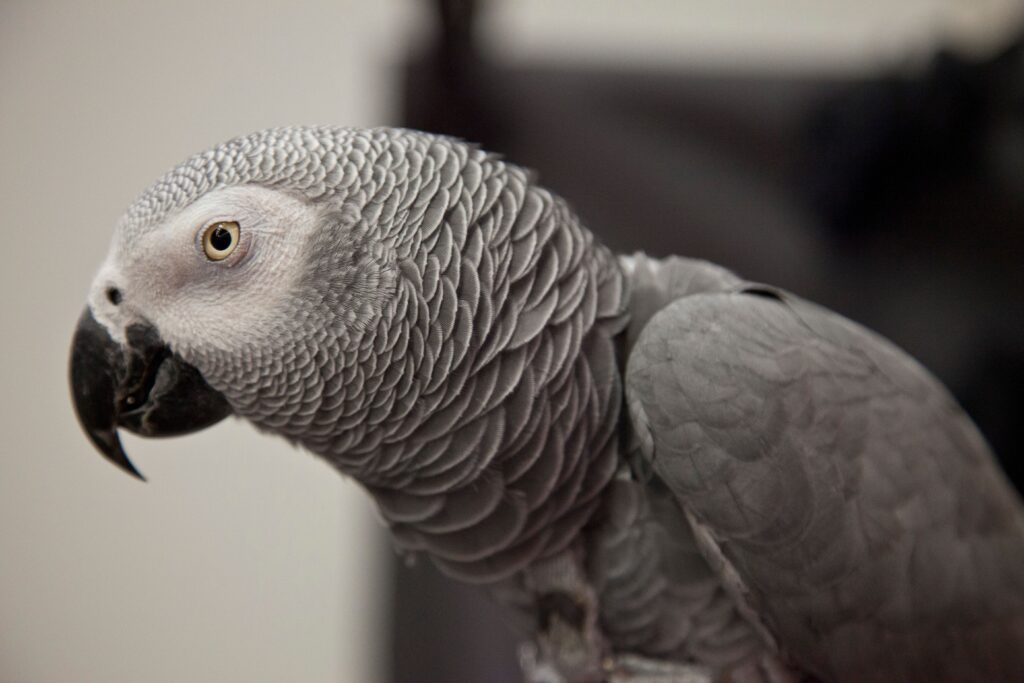
6. The African Grey Parrot (Psittacus erithacus)
The Intelligence Metric: Abstract linguistic comprehension, categorization, and numerical reasoning.
The Cognitive Breakdown: While many birds can mimic human speech, the African Grey parrot is capable of genuinely understanding language semantics, syntax, and abstract concepts. Much of what we know about their intelligence is thanks to Alex, an African Grey studied by cognitive scientist Dr. Irene Pepperberg.
Alex proved that these parrots do not just “parrot” words. He could look at an array of objects and correctly identify their colors, shapes, and materials (e.g., “green wood” vs. “grey metal”).
He understood the concept of “same” and “different,” could add small clusters of numbers together, and even demonstrated a grasp of the concept of zero—an abstract mathematical milestone that human children take years to develop. When Alex was bored, he would deliberately give incorrect answers to tease researchers, showcasing meta-cognitive awareness.
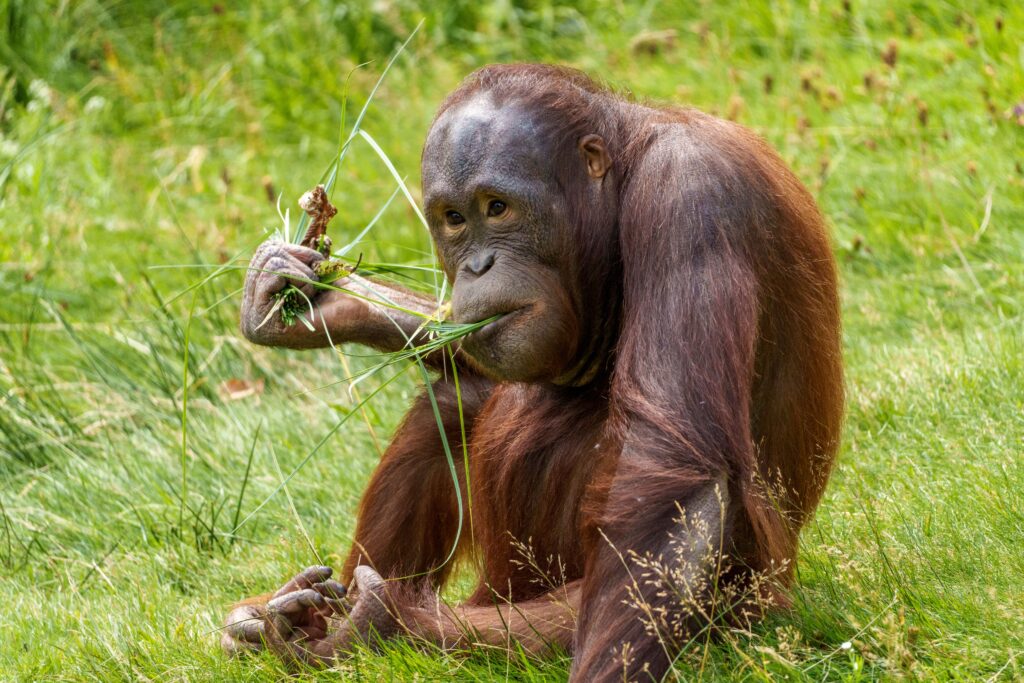
7. The Orangutan (Pogo pygmaeus)
The Intelligence Metric: Deceptive engineering, foresight, and mechanical tool manipulation.
The Cognitive Breakdown: Orangutans are the quiet, introspective engineers of the primate world. While chimpanzees react to problems with high energy and social drama, orangutans will sit quietly for hours, analyzing a mechanical problem before executing a solution.
In captivity, their ability to understand mechanical structures is legendary among zookeepers. There is an old saying in zoology circles: “If you give a chimpanzee a screwdriver, he will break it.
If you give a gorilla a screwdriver, he will toss it away. But if you give an orangutan a screwdriver, he will hide it all day and use it at night to unscrew his cage door.” They show a high degree of cognitive foresight, saving and carrying specific tools around for hours because they anticipate needing them later in the day to crack into complex feeding stations.

8. The Border Collie & Poodle (Canis lupus familiaris)
The Intelligence Metric: High working vocabulary, fast-mapping language acquisition, and social tracking.
The Cognitive Breakdown: Dog intelligence is uniquely shaped by thousands of years of co-evolution alongside humans, making them masters of human social cues. At the absolute peak of canine intellect sits the Border Collie, closely followed by the Poodle.
The most famous demonstration of canine cognitive capacity was a Border Collie named Chaser. She successfully learned and retained the proper noun names of 1,022 distinct toys.
Chaser could identify an object out of a massive pile based entirely on its name. More impressively, she demonstrated the ability to infer meaning through the process of elimination (fast-mapping). When told to retrieve a toy with a name she had never heard before from a pile containing familiar items alongside one completely new object, she correctly deduced that the unfamiliar word must belong to the new toy.
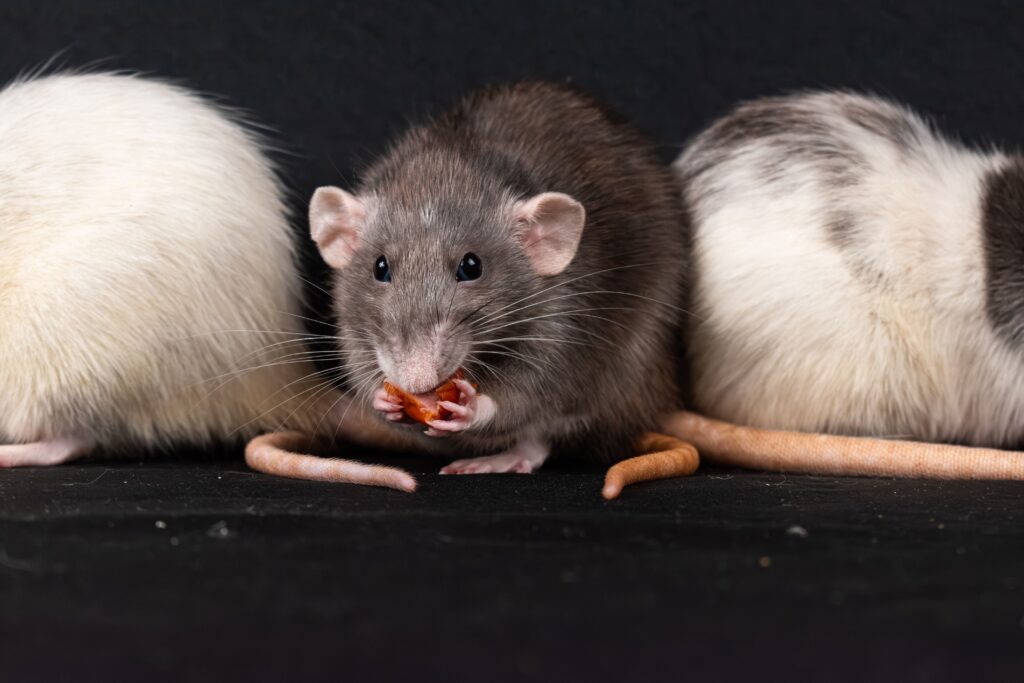
9. The Rat (Rattus norvegicus)
The Intelligence Metric: Metacognition, altruistic empathy, and complex cost-benefit analysis.
The Cognitive Breakdown: Despite their cultural reputation as mere pests, rats are highly intelligent, deeply misunderstood rodents. They possess metacognition—the ability to be aware of one’s own thinking processes. In clinical trials, rats can accurately evaluate whether they know the answer to a test. If they don’t know the answer, they will actively choose to opt out of the test to avoid a penalty, proving they know what they do not know.
Rats also exhibit profound empathy and pro-social behaviors. In famous behavioral experiments, a rat placed in an arena with a companion trapped inside a transparent tube will work tirelessly to figure out the latch mechanism to free them. Even when offered a pile of chocolate (their favorite treat) versus freeing their trapped companion, the rat will routinely free its friend first and share the food, demonstrating a sophisticated moral and emotional calculus.
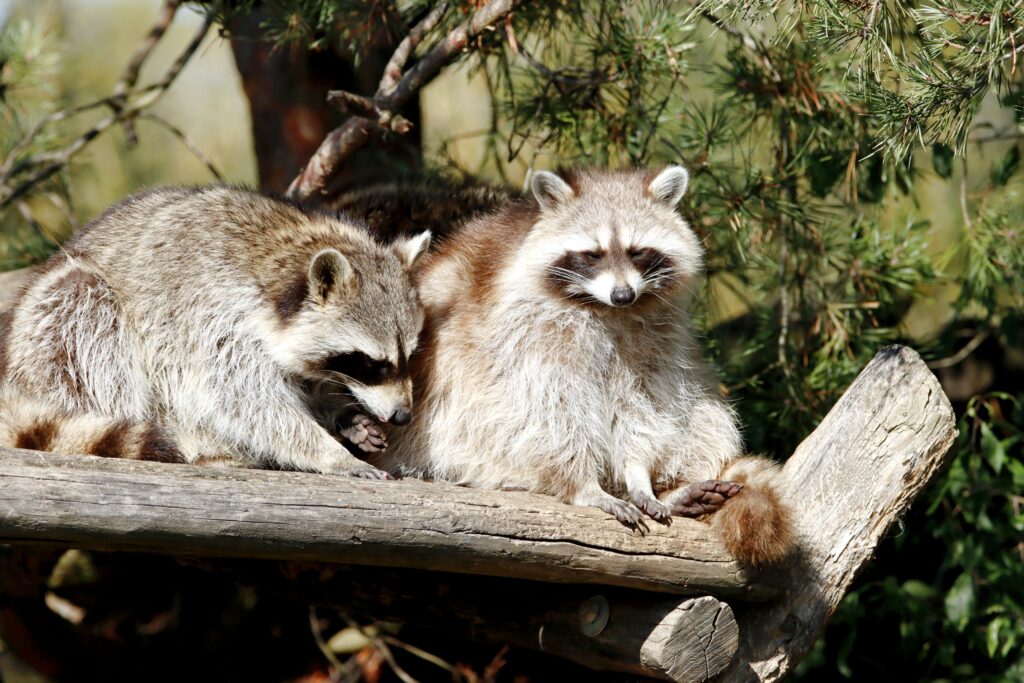
10. The Raccoon (Procyon litoris)
The Intelligence Metric: High-level tactile problem solving, long-term memory retention, and abstract conceptualization.
The Cognitive Breakdown: Often dismissed as mere “trash pandas,” raccoons possess an extraordinary level of cognitive sophistication, particularly regarding mechanical reasoning and spatial memory. Their brains are packed with an unusually high density of cortical neurons, rivaling those of some primates.
The true secret to a raccoon’s intellect lies in its front paws. Their paws contain an incredible concentration of tactile receptor cells, which are amplified further when wet. Raccoons don’t just touch objects; they essentially “see” them with their hands.
In classic zoological tests dating back to the early 20th century, raccoons routinely outperformed many other mammals in solving complex mechanical puzzles. They can memorize and crack intricate locking mechanisms—including latches, hooks, bolts, and master locks—in fewer than ten attempts. Staggeringly, replication studies have proven that raccoons can retain the memory of how to solve these precise abstract puzzles for over three years without any intervening practice, allowing them to effortlessly outsmart human efforts to secure urban infrastructure.