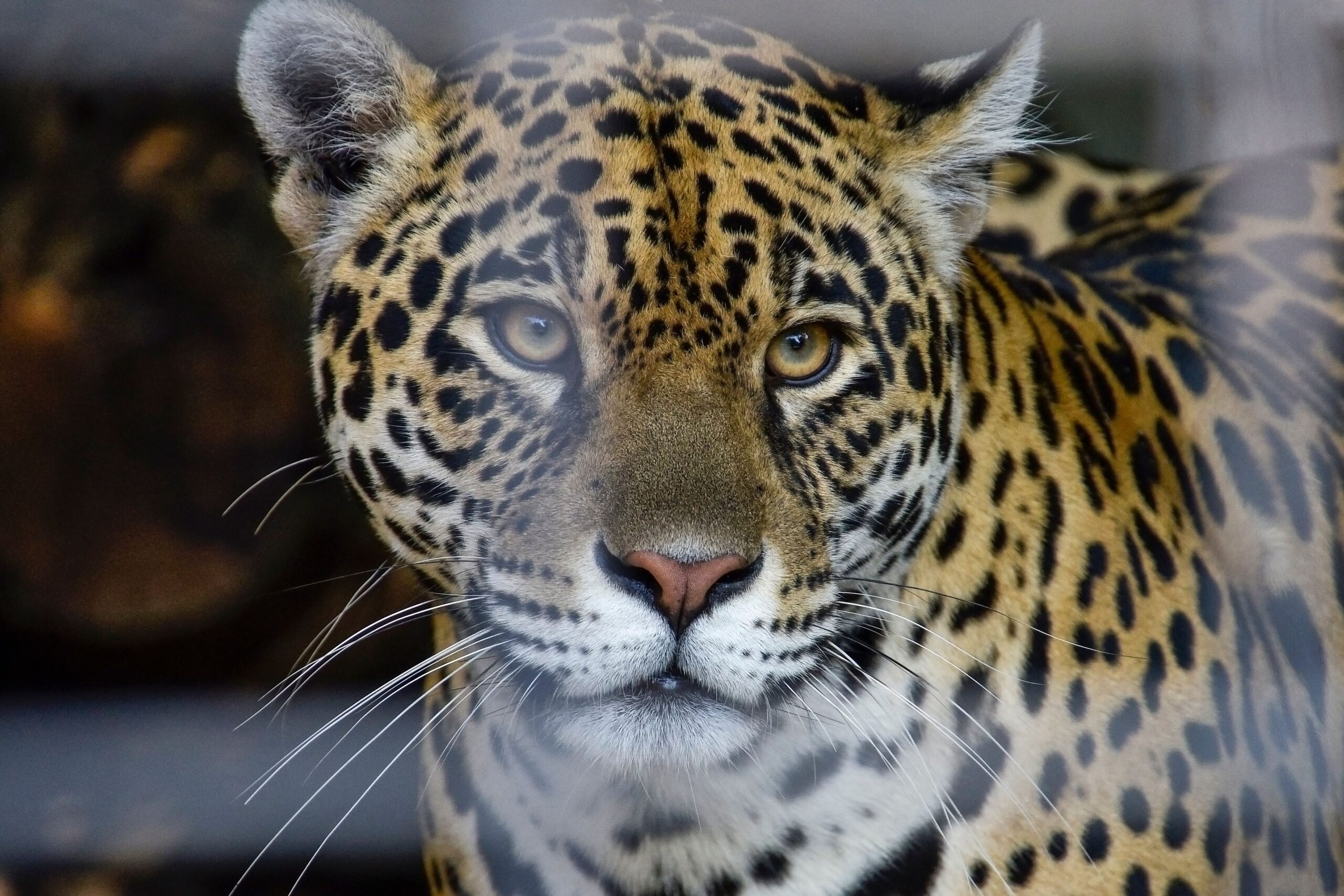
Here is a detailed, scannable look into the biology, raw power, and unique ecological role of the jaguar (Panthera onca), the undisputed king of the American rainforests.
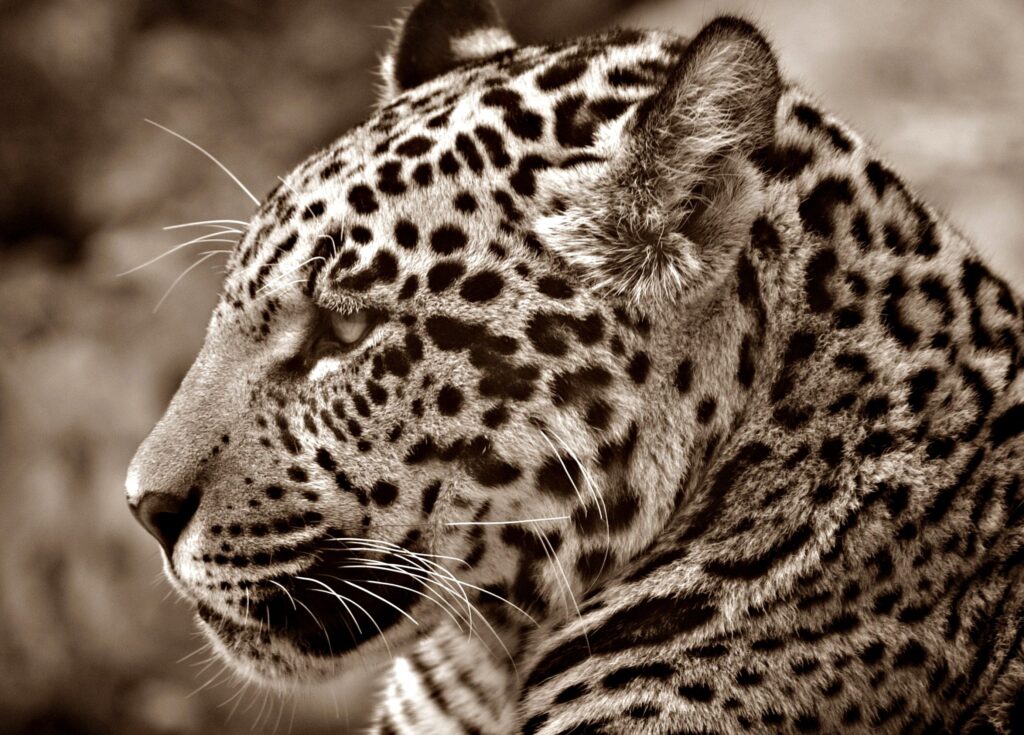
The Only Big Cat of the Americas
1. The Largest Cat in the Western Hemisphere
The jaguar is the third-largest feline species in the world, positioned right behind the tiger and the lion. It holds the proud title of being the absolute largest native big cat found anywhere in North and South America.
2. A Broad, Heavyweight Physique
Unlike sleek leopards, jaguars are built exceptionally stocky, compact, and low to the ground. An adult male can weigh anywhere from 60 to over 100 kg (130 to 220+ lbs), possessing a deep chest and extremely broad shoulders engineered for wrestling heavy prey.
3. Rosettes with a Secret Twist
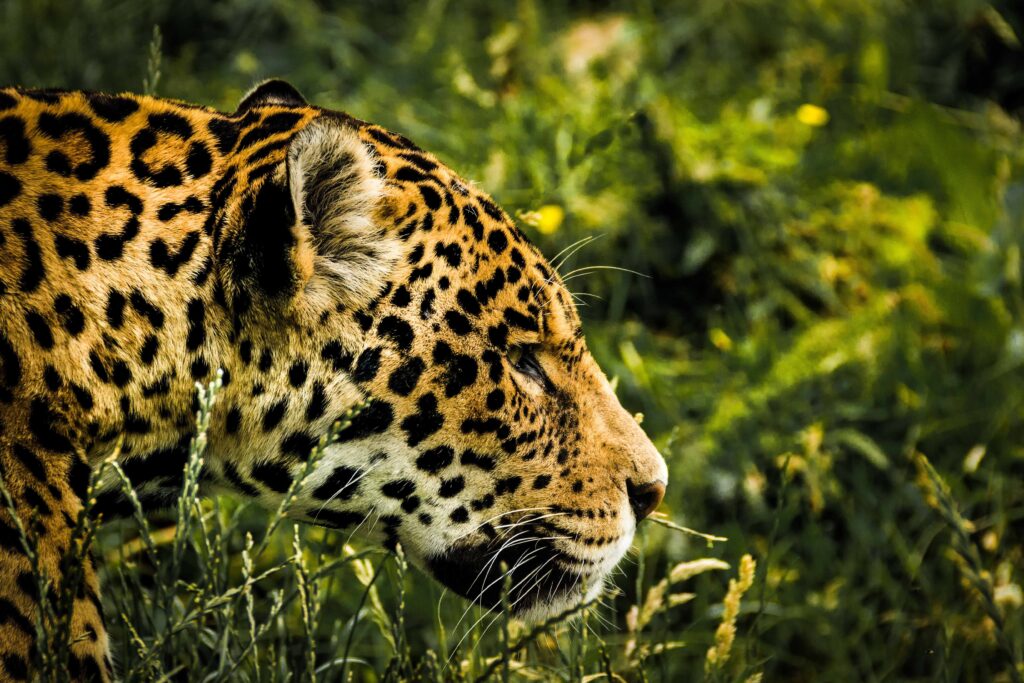
While a jaguar’s coat looks similar to a leopard’s at a distance, their camouflage pattern is completely distinct. A jaguar’s rosettes (rose-like markings) are larger, thicker, and feature one or more small, dark central spots or dots inside the hollow ring.
4. The “God of the Underworld”
Jaguars hold a deeply revered position in Native American mythology. Ancient civilizations like the Mayans and Aztecs worshipped the jaguar as a sacred deity, viewing them as gods of the underworld, masters of night vision, and ultimate symbols of warrior power and protection.
🐊 The Most Powerful Bite in the Cat World
5. A Unique, Skull-Crushing Execution Strategy
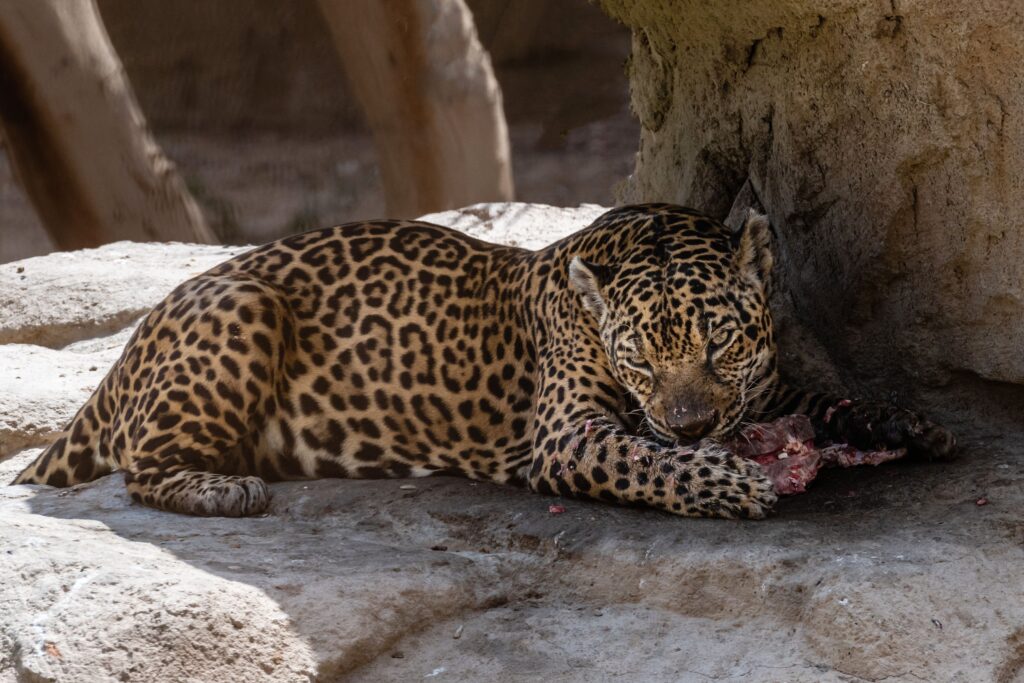
Most big cats kill large prey by clamping down on the throat to cause suffocation. The jaguar utilizes a completely different, brutal strategy: it uses its massive jaw muscles to bite directly through the temporal bones of the prey’s skull or pierce the spinal cord, destroying the brain instantly.
6. Shattering Turtle Shells and Caimans
Thanks to a bite force that exerts roughly 1,350 to 1,500 pounds per square inch (psi)—the most powerful relative to body size among all big cats—jaguars easily crunch through the armored skin of caimans (alligator relatives) and shatter thick turtle shells like crackers.
7. The Linguistic Root of “The Killer”
The word “jaguar” is derived from the indigenous South American Tupi-Guarani word yaguara. This word literally translates to “the beast that kills with one leap,” a direct nod to their explosive ambush capability and efficient hunting style.
🌊 Water Lovers & Apex Generalists
8. Master Swimmers of the Tropics
While some domestic cats actively avoid a single drop of water, jaguars are hyper-aquatic. They love rivers, lakes, and wetlands, using their swimming prowess to hunt, cool down, and travel across flooded forests during the wet seasons.
9. Direct Aquatic Hunting
Jaguars don’t just swim to cross rivers; they aggressively hunt inside them. They are incredibly skilled at diving underwater or waiting on riverbanks to swipe at fish, wrestle large caimans, or snatch swimming capybaras right out of the current.
10. An Enormous, Flexible Menu
Jaguars are the ultimate opportunistic eaters and have been recorded consuming over 85 different animal species. Their diet ranges from massive tapirs, deer, and peccaries to smaller, armored targets like armadillos, tortoises, and large birds.
11. Zero Fear of the Apex Crocodile
In environments like the Pantanal wetlands, jaguars are the absolute apex predators. They face zero competition from other animals and will routinely hunt, kill, and eat fully grown caimans, making them one of the few big cats that treat other reptilian predators1 as standard prey.2
🗣️ Behavior, Territory & Communication
12. Strictly Solitary Survivalists
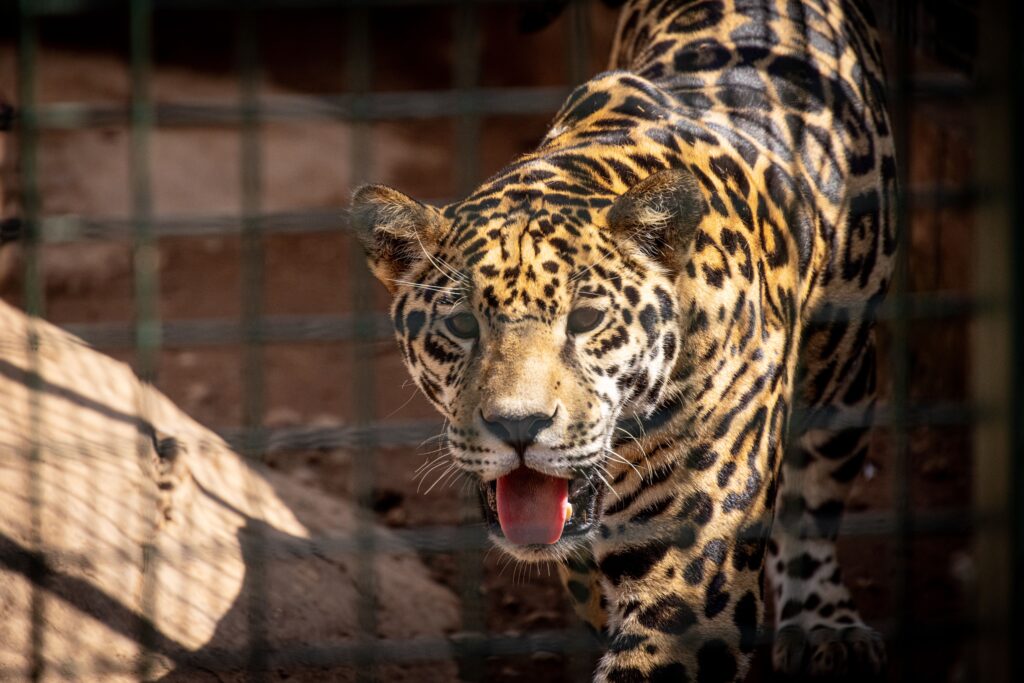
Jaguars live highly independent, solitary lives. Adults live completely alone, mapping out massive home ranges that can span up to tens of square miles. They only actively tolerate the presence of another jaguar during their brief mating windows.
13. The “Sawing” Call
Jaguars do not produce the deep, booming roar of a lion. Instead, their primary vocalization is a series of deep, guttural grunts or coughs often described as a “sawing” sound, because it mimics the rhythm of a hand saw cutting through rough wood.
14. Chemical and Visual Warning Tracks
To avoid violent territorial disputes, jaguars communicate via a complex system of “no-trespassing” signs. They leave long, deep scratch marks on soft tree bark and spray urine on trees to inform passing neighbors of their presence and size.
Reproduction & Lifecycle
15. Blind and Vulnerable Beginnings
After a gestation period of roughly 90 to 110 days, a tigress or female jaguar gives birth to a litter of 2 to 4 cubs. The cubs are born completely blind and helpless, relying entirely on their mother’s milk and deep camouflage inside a hidden den.
16. Fierce Single Motherhood
Male jaguars provide absolutely no parental care and are driven away by the mother immediately after mating. The female raises the cubs single-handedly for up to two years, aggressively defending the den against any potential predators—including the father, who may try to kill the cubs.
17. Two Years of Intensive Training
Jaguar cubs stay with their mother for roughly 24 months to learn the complex art of hunting. They must master swimming tactics, how to properly crack armored prey, and how to ambush silent land animals before navigating away to claim their own territory.
🌍 Species Status & The Fight for Tomorrow
18. Eradicated from North America
Historically, the jaguar’s range extended all the way up into the southwestern United States, including Arizona, New Mexico, and Texas. Due to heavy hunting, cattle-ranching conflicts, and habitat loss over the last century, they have been virtually eradicated from North America, with only rare, solitary males occasionally crossing the Mexican border today.
19. The Amazon and Pantanal Strongholds
Today, the vast majority of the world’s remaining wild jaguars are concentrated in South America, specifically within the dense Amazon rainforest basin and the sweeping, open wetlands of the Brazilian Pantanal.
20. The Vital “Jaguar Corridor” Initiative
Because jaguars need massive, uninterrupted swathes of land to hunt and maintain healthy genetic diversity, conservationists have established the Jaguar Corridor. This is a continuous, multi-national network of protected wilderness pathways stretching all the way from Mexico down to Argentina, allowing these brilliant big cats to travel safely across human-dominated landscapes.